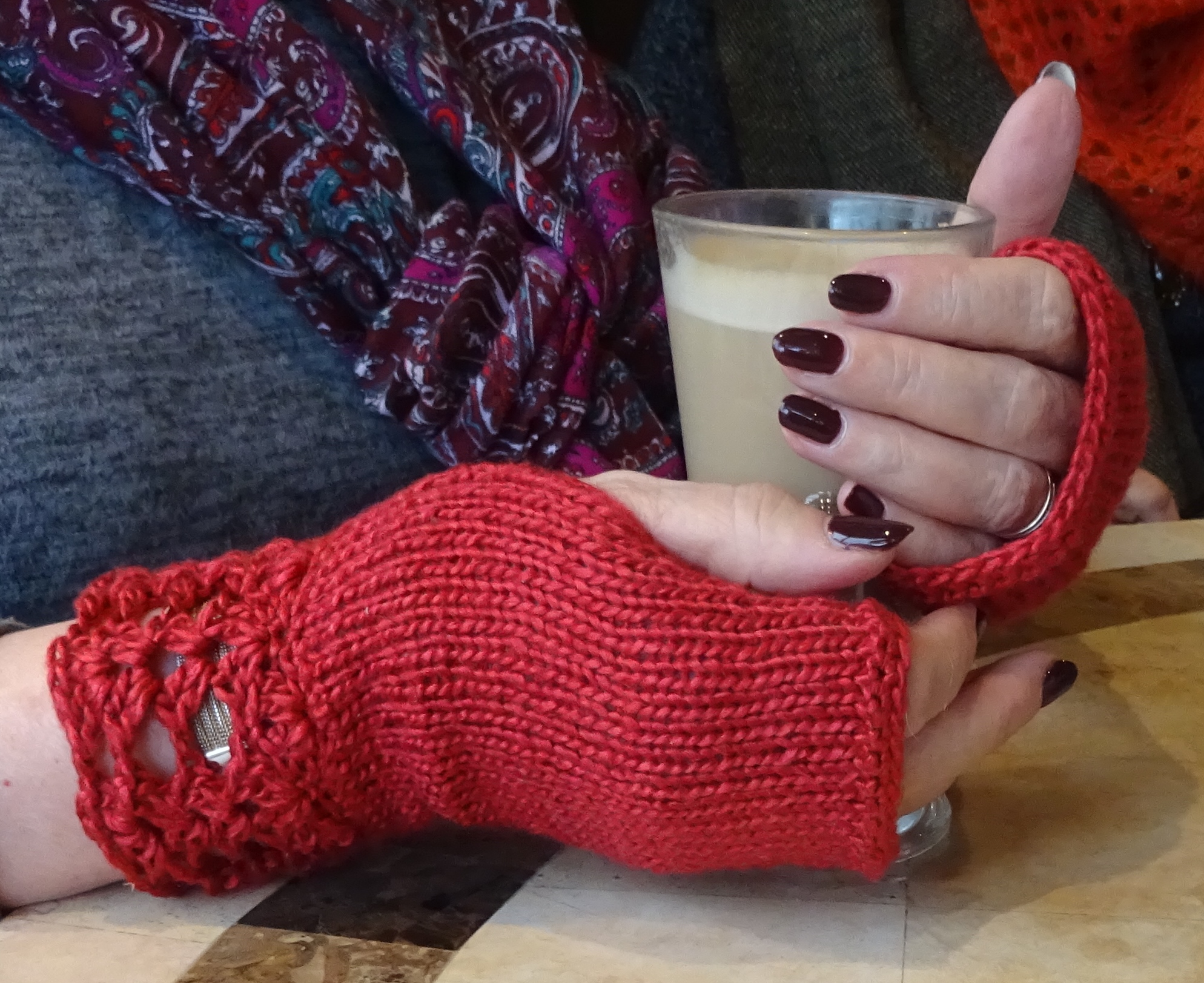
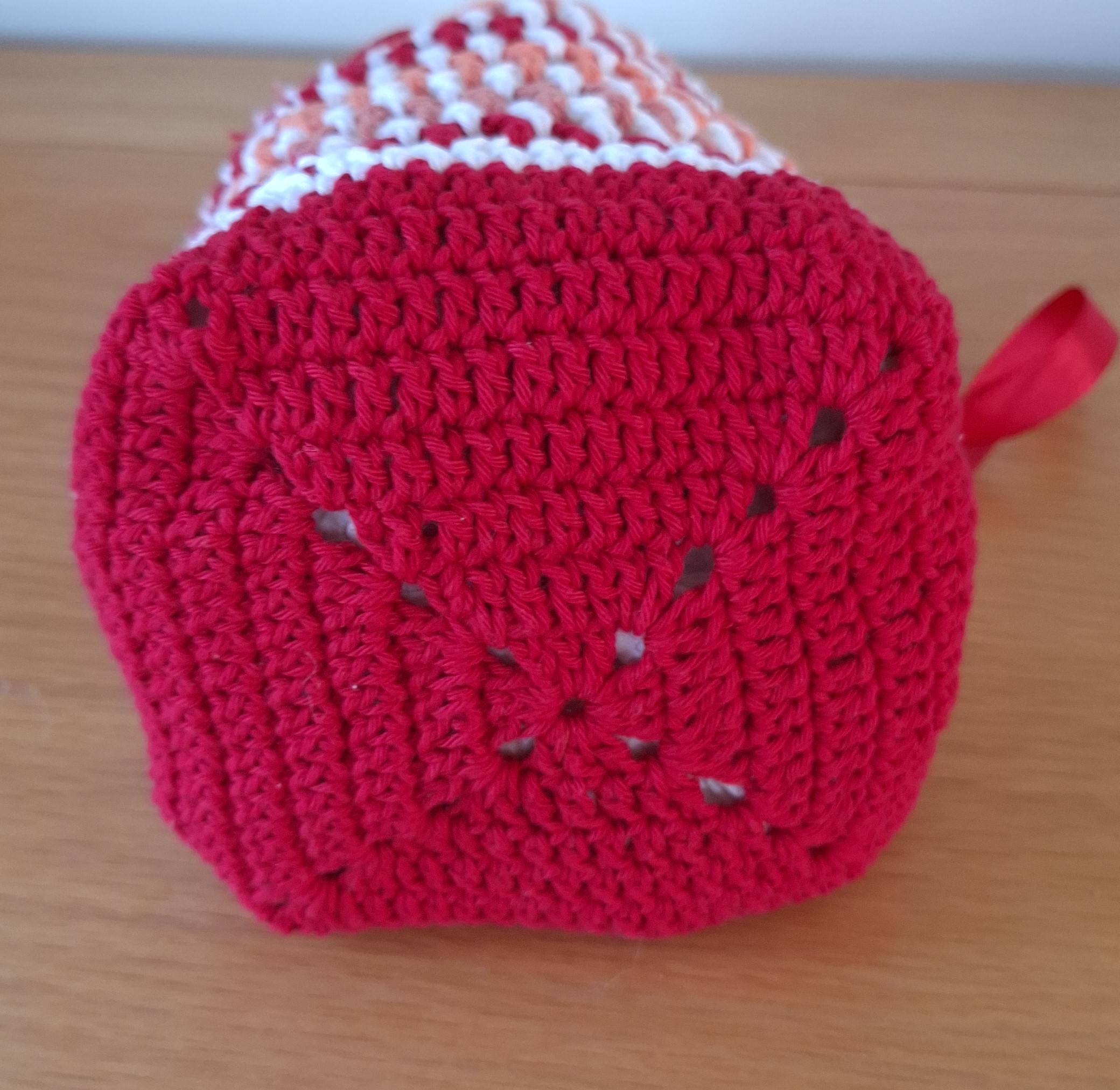
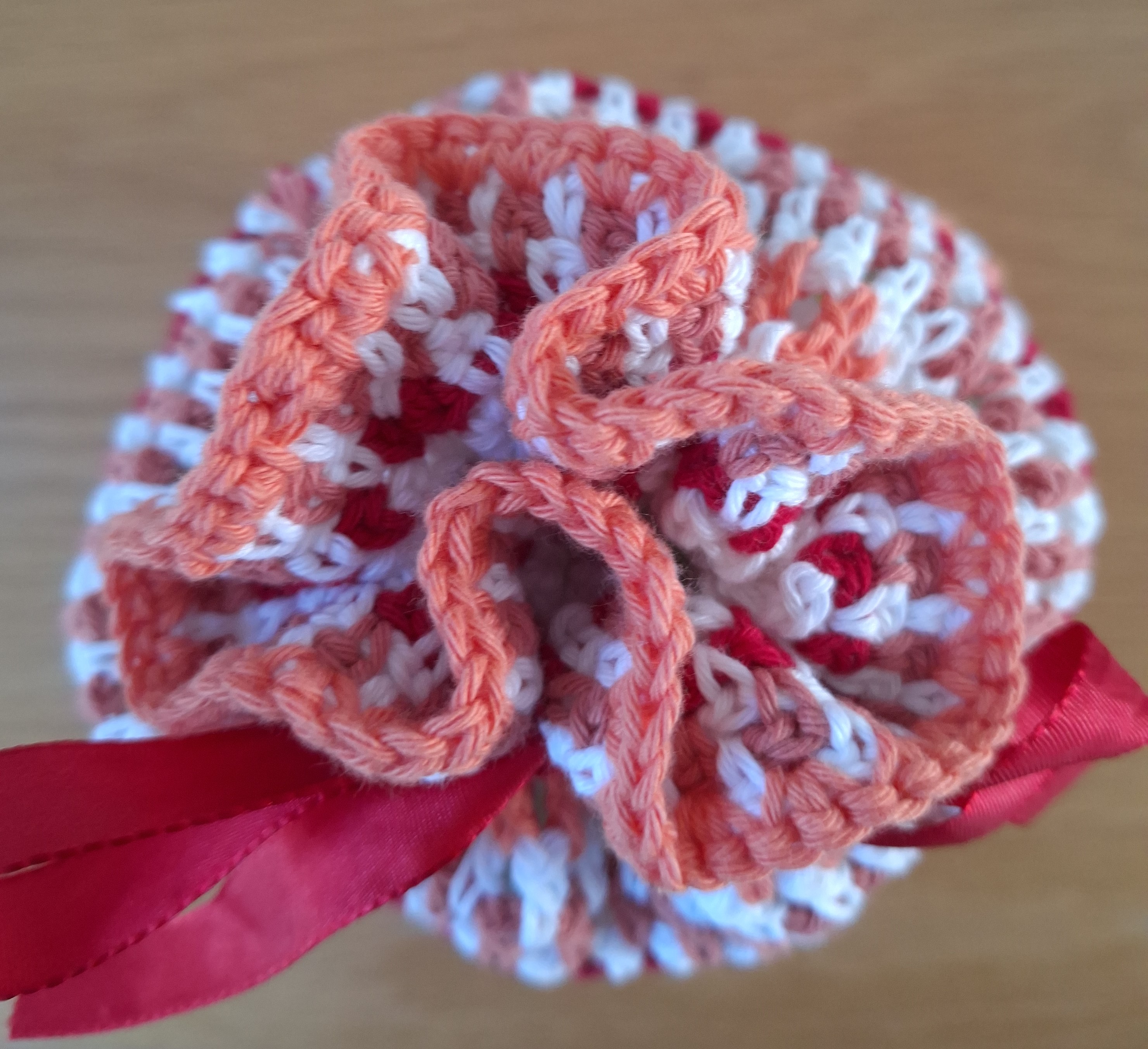
I went on one of my regular walks on Saturday and noticed there was a nip in the air. My hands noticed it most! So I realised it is time to start using my fingerless mitts again. They are always the best for autumn as you can leave your fingers free to use the phone or when shopping.
I have numerous pairs of fingerless mitts and normally I am able to match the colour to what I’m wearing, making them a versatile and useful accessory. I often make a new pair if I can’t find the right match. They are great small projects and quick to make, and for me that means a stash buster!
So in honour of the autumn season and to help you all stash bust a bit, I have decided to make all my fingerless mitts patterns free. Some were already free such as the Simple Handwarmers patterns (1 and 2) and Easy Peasy designed 15 years ago, most are knitted and one is combination knit and crochet (Doubly Delicious).
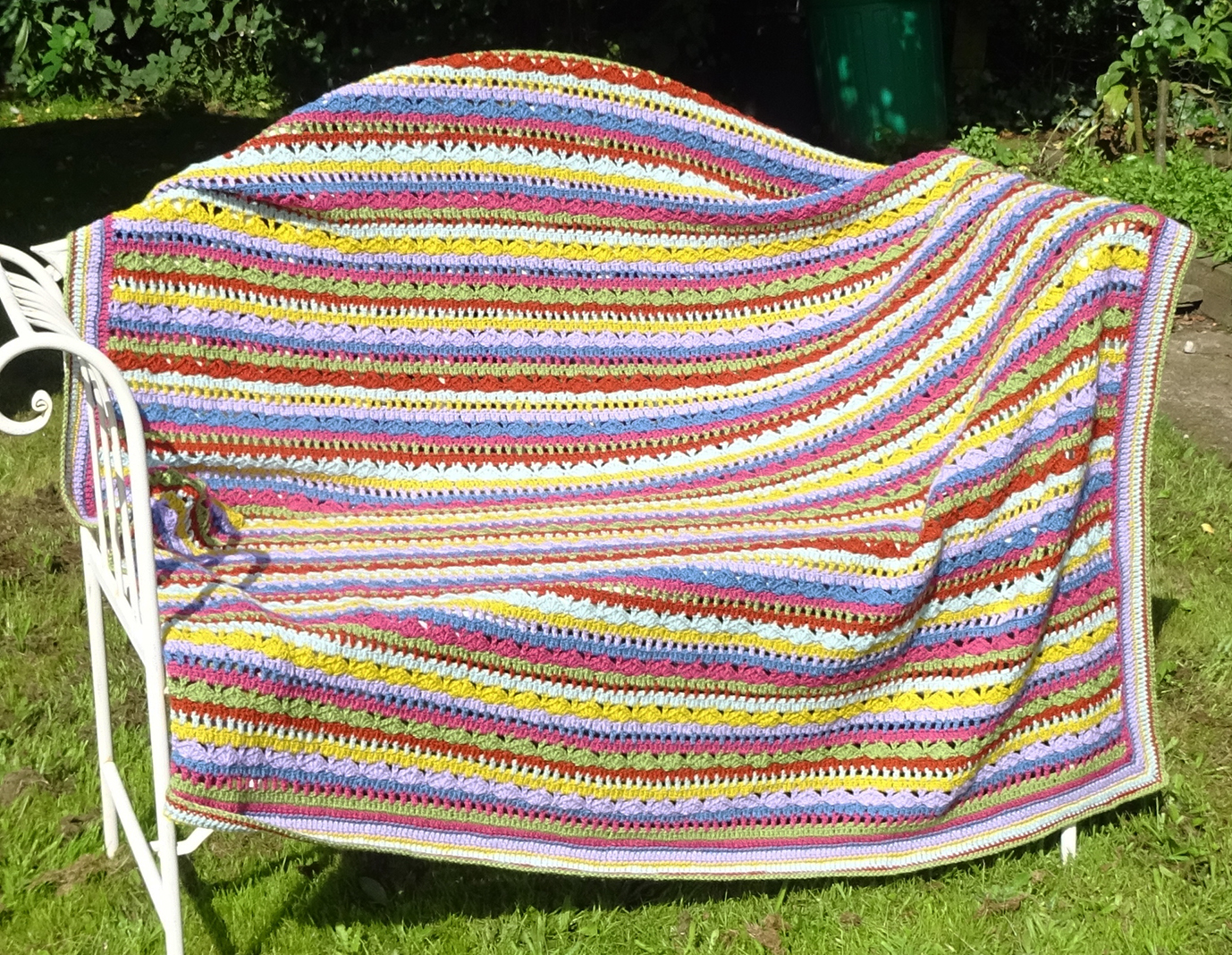
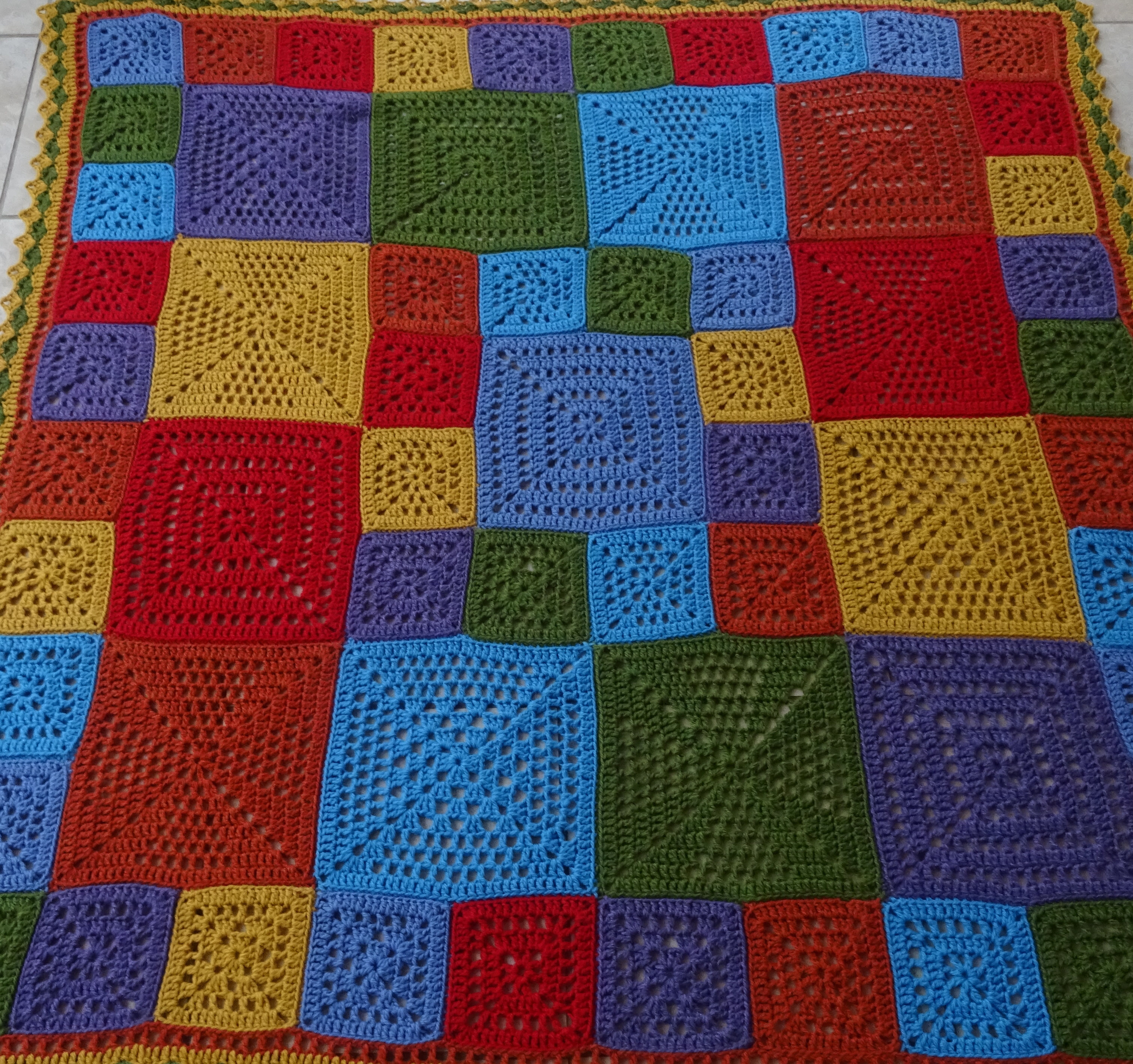
Way back in 2016 I held a workshop at the Cheshire Fibre Festival (I also co-organised the festival!) called Crochet Blankets; Stripes or Squares. I designed 2 blankets for the workshop both using the same stitch pattern, one was a stripe blanket the other a square blanket. They were called Sandlebridge Stripes and Sandlebridge Squares and you can find the patterns on Ravelry (Stripes and Squares) and on LoveCrafts.
Very recently someone made the most lovely comment on the Sandlebridge Squares pattern on Ravelry and it made me recall back to when I designed it. I offered her a copy of the workshop handout notes from 2016 and later that evening I thought ‘why not publish them on my blog?’. So this blog is a reproduction of those notes, although edited slightly to remove some of that workshop specific material.
It is very word heavy, but I’ve thrown in a few photos to break the monotony for you.
In the workshop I encouraged everyone to share their blanket making experiences and it was a lovely 2 hour workshop for me and, I hope, the attendees.
Sandlebridge Stripes
Here it begins:
Introduction
Crochet blankets are pretty, practical and very popular. If you haven’t yet made one, you’re probably contemplating it.
Traditionally, granny square blankets used to be the most common type of handmade crochet blanket. However, in the modern world crochet has moved the boundaries on from that tradition and now there is a wide choice of styles to choose from. But which one is right for you? It may not be the one you love to look at, because you may find it very tricky to make, or even boring! But how do you know?
Crochet blankets are a large investment in time and money, not to mention the space you need to store your project whilst making it. So this workshop is aimed at showing you the things to consider when choosing your crochet blanket, to help ensure it does not end up hidden in a cupboard half-made, unloved and taking up precious space.
It covers yarn, ease of making and style. The 3 main styles of blanket are stripes, a large crochet square and lots of smaller crochet squares. There are other styles but the pros and cons of each style will fall into one of these 3 main categories, for example hexagonal motif blankets will prove similar to small squares blankets.
I’ve designed more than a dozen blankets and made more than double that, so I have significant experience. And funnily enough, until recently, the vast majority of the blankets I made were made of squares!
I designed 2 blankets, Sandlebridge Stripes and Sandlebridge Square(s) patterns, which are used in the workshop to demonstrate the pros and cons of style, and I included the basic granny square pattern, the basic granny stripe pattern and the basic corner to corner pattern, but not in these notes for the blog.
Crochet Kit
You don’t need anything special to make blankets, just your usual crochet kit which should include hooks, scissors, tapestry needle, solid ruler and lockable stitch markers. But you will need a large project bag or tub, and have a good way of organising your yarn if you are using lots of colours. And if you’re using stash a set of small scales will be handy for weighing your yarn and how much you are using as you go.
Size
Crochet blankets can be any size you like from a small baby blanket to a huge queen size bed blanket (and larger!). Here are some typical sizes:
Baby car seat – 40 by 50cm
Baby – 60 to 70cm square or rectangular
Lap blanket – from 80cm square
Single bed – from 1.1m to 1.3m wide by 1.7m to 2m long
Double bed – from 1.45m to 1.6m wide by 1.7m to 2m long
King size bed – from 1.6m to 1.8m wide by 1.9m to 2.2m long
Yarn
You could use absolutely any yarn, either in base quality (eg merino, silk, acrylic) or thickness (4 ply, dk, aran). If you are following a pattern then you will be guided, but you may be making a blanket to your own design or even adapting a pattern. However, the end result may not be right if you don’t select your yarn carefully.
If you consider base quality – what is the blanket to be used for?
For example, a baby blanket may need to be in a strong yarn, able to withstand wear, plenty of washes and with colour that is fast – acrylic would be good, as would cotton.
An heirloom blanket, which will be lovingly cared for, with a lovely pattern would benefit from a yarn with good stitch definition, a good quality merino 4 ply may suit.
And do you want to make it quickly? If so aran weight, chunky or super chunky would work well. Just remember the finer the yarn the longer it will take to make.
A good all round yarn is one that washes well, makes up reasonable quickly and has good colourfastness. And Stylecraft DK is one that is favoured by many – it is good quality and affordable.
Typical quantities of Stylecraft Special DK for blankets:
Type
Size
Quantity (100g balls)
Baby car seat
40 x 50cm
2
Baby
70cm x 70cm
3
Lap blanket
1m square
6
Small bed
1.1m by 1.8m
12
Double bed
1.5m x 1.8m
15
King size bed
1.8m x 2m
20
If you are using several colours, then divide the amount by the number of colours and add a good margin, say 20-25%.
Colour
Colour tends to be personal choice, and that choice is many and varied, but you don’t need to have lots of colour. A single colour blanket can look stunning.
There are lots of resources available in books and on the internet about colour theory, which will help you with colour choice.
If you have difficulty choosing then there are lots of colour packs available from yarn suppliers and plenty of designers to take inspiration from.
Style
Some people like stripes, some people like squares. Which do you like and why? Or do you have no preference? Whatever it is, remember that any stitch pattern can be done in a square or in a stripe. So if you find a stitch pattern you like and it is in stripes, you can adapt it to squares if you want to (and vice versa), it just takes a bit of experience.
Blanket style
Pros
Cons
Stripes
Rhythm of repetition is soothing and therapeutic. Colourwork is also very therapeutic. Stripes look fantastic!
For some this repetition can be boring. There can be lots of ends to sew Sewing ends at both sides of the blanket, or in some cases mainly one side of the blanket can make it uneven. The edge can be difficult and messy to set up The larger it gets the less portable it is
Large square
Good rhythm, especially as it gets large. Good opportunity for colour therapy. The edge takes care of itself
Lots of ends to sew, if using lots of colour The larger it gets the less portable it is.
Small square
Portable (although join as you go squares may not be depending on your joining routine) Good opportunity for colour therapy. The edge is easy to set up, and sometimes not necessary
Not so good rhythm Joining Sewing ends Unless it’s join as you go, then best to block before joining.
Sandlebridge Squares
Layout
Layout can be anything you like, and absolutely anything goes. However, if you want variety in your crochet look for a layout that isn’t all the same – mix and match squares/motifs and stripes. Some graph paper may help you.
A blanket design from 2015 where I used different sized squares to vary the layout
Ease of pattern
If asked what my choice of easy and quick blanket to make would be, then the answer is simple – in aran weight, a large granny square and in one colour! This is because aran weight makes up quickly, I find granny squares easy and not as boring as stripes (I have a low boredom threshold) because there are 4 corners to stop and change rhythm, there are fewer ends to sew and the edge takes care of itself. But this is my choice, I know that I like to make blankets quickly and I know where my boredom threshold lies J
When considering ease of pattern here are a few other things to think of:
The easiest sts to make are in spaces (such as a granny st which works most sts into a 1ch space) – so if you want a quick make or are an inexperienced crocheter, you would use these. Even a stripey blanket with a repetitive pattern can be made easy with a pattern that works in spaces (such as a granny stripe).
Do you want to crochet quietly and enjoy a challenge? Or do you want to crochet your blanket in front of the tv, on the train, in the car (as a passenger), at knitgroup?
These will determine the complexity of the pattern you should try; a complex pattern will require concentration and may prove a challenge – but do something simple in front of the tv (you don’t want to frog often!).
Do you get bored easily? You need more variety and complex patterns, maybe something that has lots of rows/rounds of pattern rather than the same row/round repeated.
Do you lack crochet confidence? Aim for a mix of easy and slightly more complex, the easy parts will give you confidence and the slightly more complex parts will stretch you a little.
Remember: always do a swatch to see whether you like the pattern!
The Edge
The more fancy the blanket pattern, the simpler the edge should be. But a plain blanket can withstand a very fancy edge or a simple plain edge.
If you have a stripe blanket, try to avoid doing the first round of the edge in the same colour as the first and last row, to avoid the blanket stripes appearing unbalanced. Also if you are using lots of colours in your blanket but want only a few for the edge, don’t choose them in exactly the same order, take, say, 3 colours from across the range, otherwise you may get a ‘multi-framed’ effect.
Dealing with the edge on stripes – normally pick up 2 sts at the end of tr rows and 1 st at the end of dc rows. Also, to avoid holes at the side of the stripes, make sts into the row ends NOT around the posts of the row ends.
Joining
There are many ways of joining squares, and they warrant a whole workshop! Whatever way you decide to join, it is best to trial it first to ensure you are comfortable with the process, you want to be able to join it at the end and if you don’t like the process the blanket may languish unfinished!
Tips and tricks
The ends – Sew your ends as you go because this will give the neatest finish. With stripes you can even work over them as you start a new colour, but for a solid finish I recommend sewing them a little first before working over them. If you don’t like sewing ends, change colour less frequently – i.e broader stripes or one colour squares. Even numbers of rows of one colour will result in all ends at one side of the blanket – so choose odd numbers to even out the ends.
Standing stitches – If you are an experienced crocheter, you may wish to start rows/rounds with new yarn with a standing stitch rather than 3ch, 2ch etc. This will give a better finish.
Sewing the last stitch (on rounds or on the edge) – Similarly, you will achieve a better finish if you sew the last part of the last st on a colour change round rather than join the round with a slip stitch.
Avoiding jogs (on rounds) – To avoid getting a jog (or twist) try starting your rounds in different places and thus also offsetting the location of the ends that you need to sew.
Hook changes – If you want to do a certain st on a row/round and it’s puckering or tightening – just change your hook size – larger to correct tightening and smaller to correct puckering.
Have scales handy – weighing your yarn to see how much a stripe or square uses will help you in identifying whether you have sufficient to finish or maybe just make that blanket a tad larger.
Pace yourself – crochet injuries are rare but too much crocheting can result in tired, arms, wrists, hands, shoulders and back. But if you have a tight timescale in which to make the blanket, use maths to work out how much you should do each day, and work out whether you can manage that comfortably.
Join as you go squares – If doing small squares that are join as you go, they can be less portable. But you could work each square up to the last round and join later – or do all rounds without joining and don’t fasten off, instead undo part of the last round and join in a joining session.
I hope you find these notes helpful and they encourage you to maybe be a bit more adventurous in choosing your next blanket project. If you want to see my crochet blanket designs you can find them here.
I also did a workshop on mandalas and those notes may well be published here soon! Until then…….
I’ve been slow and it was a long time ago but I hope my last blog post has helped you focus on your stash. It has taken me a while to publish this because I started with A LOT of words! I had to do an awful lot of editing out so this is a concise summary of my stash taming.
Maybe you are ready to take the step to reduce your stash and break the stash habit, maybe you want to use it all or maybe you don’t think you have too much and you are happy to leave it where it is! If the latter then you may not agree with a lot of things I’m going to say in this blog post but don’t worry I have a new post in draft which you won’t have long to wait for.
I started to reduce my yarn stash several years ago. It spurred me on to declutter more of my home and it is something that is embedded in my life now. At one stage I know I had over 350 skeins/balls of yarn. I thought this was a lot but I’m amazed by the number of people who share their stash problem on social media, hiding it in all sorts of sneaky places so their family can’t see it. Many have a lot more than 350 balls, some have rooms stacked high with yarn – probably even more yarn than a yarn shop! S
Ask yourself a few questions: Do you know how much yarn stash you have? Do you know where it is stored? Do you hide it? These will help you think about whether you have a stash hoarding problem and whether you are ready to tackle it. The suggestions below are based on how I tackled my stash problem.
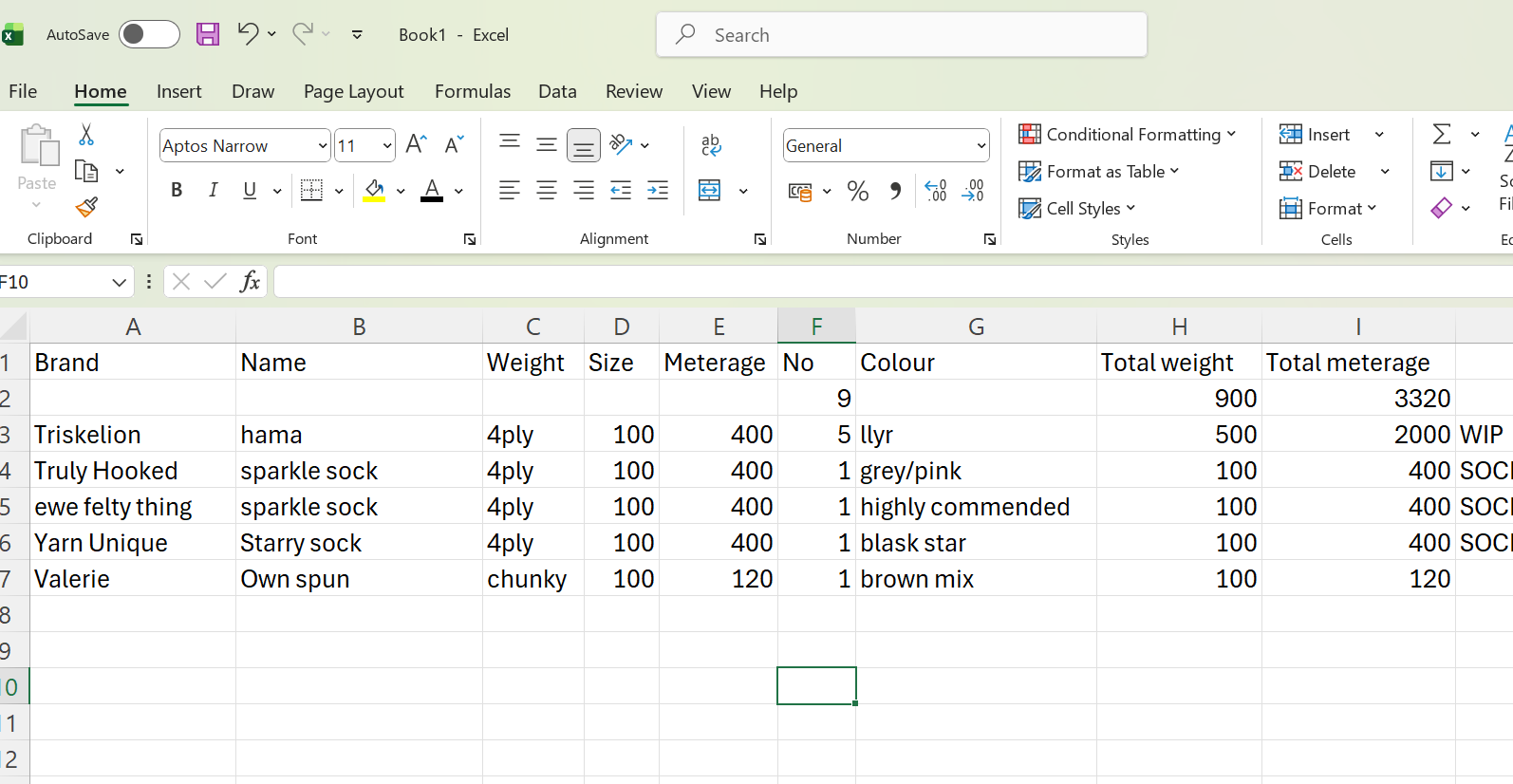
Cataloguing it was the first stage and for me that means a spreadsheet. Cataloguing your stash gives you a good grasp of how much you have. It’ll take time but you don’t have to do this all at once, work through it in stages. Just make sure your catalogue or spreadsheet covers all the things that you need to know, so you can just use that to help you declutter once you have a full picture of your stash. And don’t forget your kits, you could have a lot of yarn lurking in those kits!
Example spreadsheet
I started with the spreadsheet I developed in 2014 which peaked at 350 balls, but a ball could be 25g or 100g and could be laceweight or chunky so that didn’t really give an idea of how much potential knitting and crocheting I’d need to do to use it. I decided to redevelop and include meterage. However, the original spreadsheet did show 25% was 4ply, 35% was DK and 20% was lace – and, using some averages, that major part of my stash was probably well over 100,000m!
The basic information you may want to log is: brand, yarn name, composition (eg cotton, silk, merino), ball/skein weight, meterage per ball, colour (you may wish to give colour name, colour group and lot no), number of balls , you may wish to add where you are storing it (label cupboards, shelves, boxes so you can find it easily) and possibly original price. I didn’t bother logging price, mainly because I decided declutter was the object not the monetary value. I added a simple formula to work out the total meterage and I can sort the spreadsheet any which way I like – useful when trying to match a stash busting project to my stash.
The second stage is to work out what you can or want to use. It is tempting to hold onto a skein because it is so beautiful and you really love it, but just ask yourself ‘will I really use it?’. Surely a good yarn deserves to be used, if not by you then by someone else. Then sort your catalogue into the yarn you can and will use as a priority, at this point you can add to your catalogue what it will be used for and possibly a priority order. My now small stash spreadsheet has ‘socks’ against 5 entries as well as the 8 in WIPs.
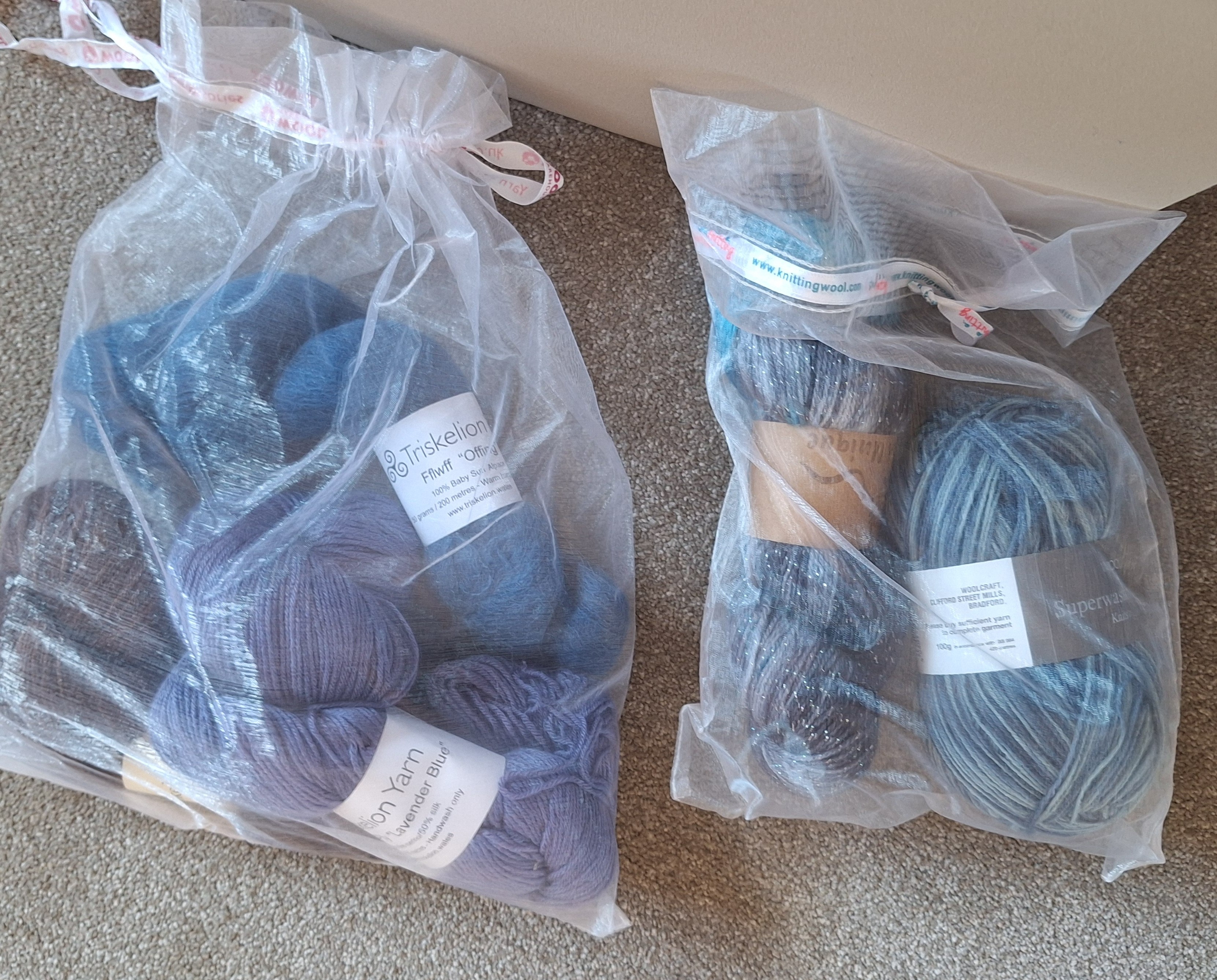
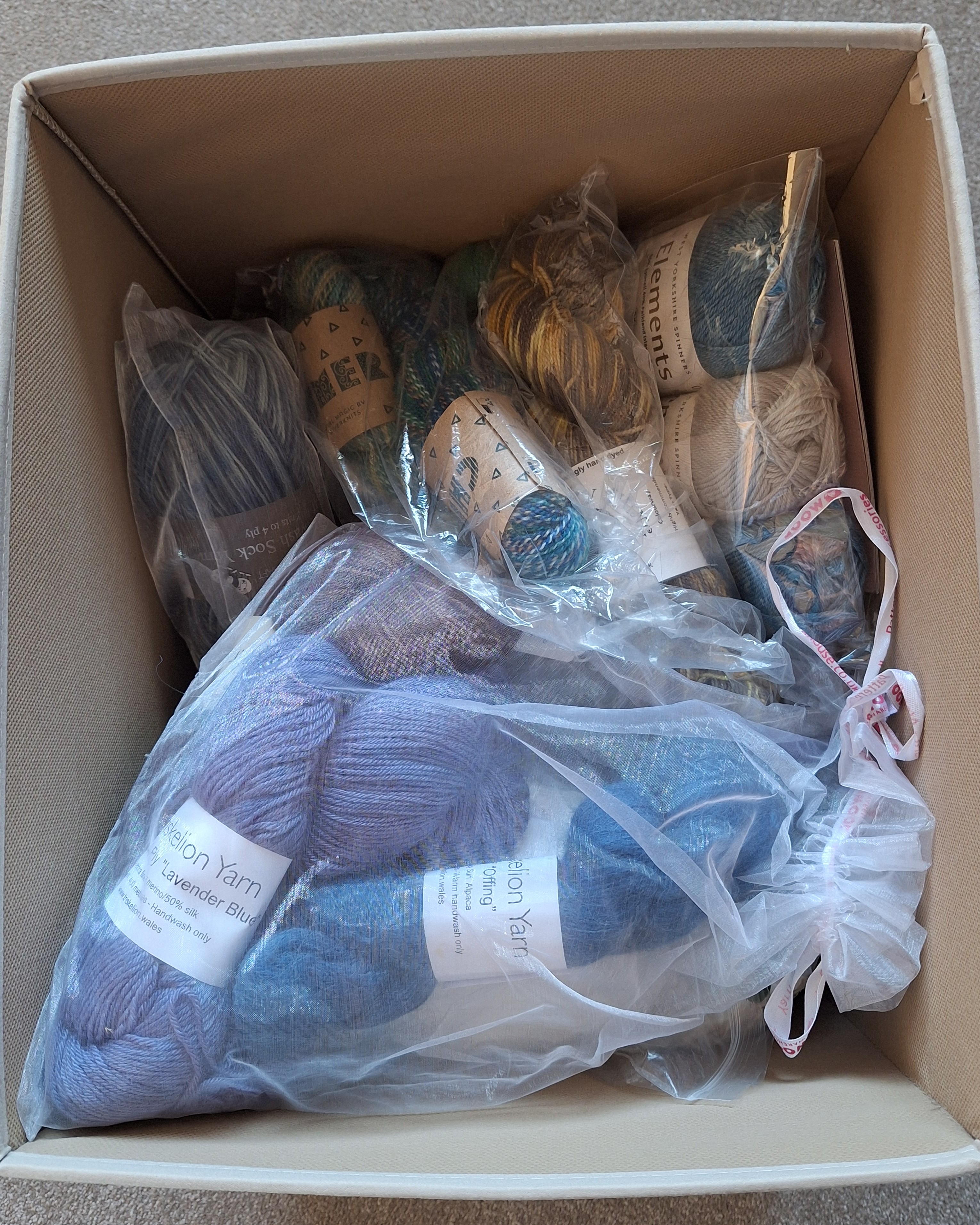
The next stage is to take all the yarn you will use and put it in sensible and visible locations. That may be shelves or boxes in your cupboard or craft room. Don’t put it somewhere out of sight – make sure you are conscious of it. Try to touch only the yarn you will use because once you touch yarn you can’t use you may fall into the temptation trap! Don’t forget to catalogue it as kept and label it. I like to keep mine in organza bags.
You will now be left with yarn you cannot/must not use. It may be that at this stage you need someone to help you, because this a dangerous point – once you know it should go temptation may creep in again! So a friend may help you sort it ready to remove from your life, and yes you may shed a tear or two. Sort it into sensible groups – luxury yarn, yarns suitable for toys or blankets, regular yarns, and then label it. Depending on how much you have to ‘remove’ this may be a lengthy process and something else you want to do in stages.
How to remove it? There are some very good facebook groups for selling yarn, especially luxury yarn. Selling it is a great option as you get back some of the money that you have, dare I say it, wasted on yarn! There are other selling websites such as ebay and I have seen a new trend in craft de-stashing sales. Or you may wish to give it away to someone who you know will use it – ask your friends if they would like any or if they know anyone who would like any. Or donate it to a good cause – there are many knitting groups, care homes, hospitals and schools which appreciate yarn donations. And then there are charity shops, but make sure you find ones that have special craft sections. Knowing that some of your yarn will be put to good use and will even raise money for charity is a great feeling.
There are 2 final stages to the declutter and both are very important.
Start using your remaining yarn stash as you planned and keep recording it in your catalogue. Once I started to use up my remaining stash I found checking off numbers on my spreadsheet gave me a buzz.
Do not buy any new yarn unless you have a distinct plan for it AND you know it will be used within a couple of years, or even a year, or better still a couple of months! I have been remarkably loyal to this stage despite the temptation put in front of me every day.
Believe it or not this is a short description of my stash declutter. There were many points where I stopped and readdressed, but I got to a point where I felt my yarn stash was manageable. I now have 23 skeins/balls and 8 of those are in action in my current projects (WIPs). My total meterage in stash is 7,500m and I can fit all my stash into one IKEA KALLAX cube!
All my srash!
If you have any tips on decluttering your yarn stash, please share them here, on Ravelry or on Facebook.
Happy New Year! It’s been a long time since I last blogged. I have had a very busy time in the last couple of years and I moved house recently, so my focus has been elsewhere. I don’t make resolutions normally but I’m making an exception – I resolve to blog regularly this year!
You may have noticed that I haven’t designed anything new for quite some time. For the last few years I have slowed in my designing and tech editing work, eventually giving up the latter last April. Since then I’ve thought a lot about where my designing should go. I love the creative side but not all the behind the scenes work required to formally publish a paid-for pattern. The New Year has made me focus and I have decided that I am not giving up designing just changing focus to share my creativity and hopefully inspire you. I may publish the occasional new pattern but it is more likely to be free.
My first share is a problem that I’ve seen escalate in recent years and it is ‘the stash problem’.
We live in a consumer society and all around us companies of all shapes and sizes are blasting marketing techniques at us to encourage us to buy their goods. The yarn world is no different although probably not the worst culprit. So it is not surprising that many yarn users have a stash of yarn that is far too big or, as some say, stash beyond life expectancy (StaBLE). One of the ways to tackle a stash problem is by a declutter and I will blog about some declutter tips next time. This blog I’ll share my thoughts and ideas on choosing ‘stash busting’ projects. Stash busting projects are the subject of many blogs these days. It’s a reflection of the realisation that we do have a problem. I’m not going to point you in the direction of specific projects share my ideas which may help you decide what sort of stash busting projects to take on.
There are questions that I ask myself every time I take on ANY project but the major ones can be summarised in 3 groups.
Will I make it? Am I being too ambitious with the planned project? Do I have the time to make it? And will I enjoy making it? At first I found this difficult to answer but it’s a lot easier now as it made me aware of what I really want to make.
Is it practical ? Will it be used by me or the person I am making it for? Some years ago I spent a lot of time making presents and I exhausted the number of scarves, mitts, hats, cowls and shawls that people could have in their cupboards, even if they actually liked them. Yes, let’s face it what we like may not be what other people like. I’ve seen and heard of so many crafters being disappointed, or even reduced to tears, when someone doesn’t appear to like their gift which is sad as we all know how much thought and effort we put in, but it has helped me think very hard about why I am making something. It gives me a buzz each time I see someone wearing a gift I gave them several years ago, so I get it right sometimes 😊, but I am so much more realistic now.
Is it sustainable? In a nutshell – how long before it ends up in landfill? This question forces me to consider carefully any manmade fibres in a project, which are good for blankets that will be loved and potentially used for many years or baby clothes that will be washed and then probably passed on but not necessarily good for fashion pieces which may be thrown out after a season or two.
So I ask myself these same questions about a stash busting project and these are some types of project I found ‘safe’ to take on.
Small projects There are some great ideas out there for small projects perfect for using up bits of leftover yarn – but do the little items made get used? Everyone is different so what I would like may not be what my friend likes. So, for example, I would avoid pin cushions and cute little amigurumi toys but I would happily make washcloths (in cotton or linen), bunting/garlands, Christmas tree decorations or fingerless mitts.
Large projects I think it is difficult to make a garment sized project from leftover yarn but if there’s a lot of excess yarn of one type it could work. And the same ply of yarn in lots of different colours could make beautiful and colourful scarves and shawls. But in my experience the best large stash busting project is a blanket. You can mix and match different plys and colours of yarn and be very creative, holding 2 or more yarns together and being as dramatic as you like in your colour scheme.
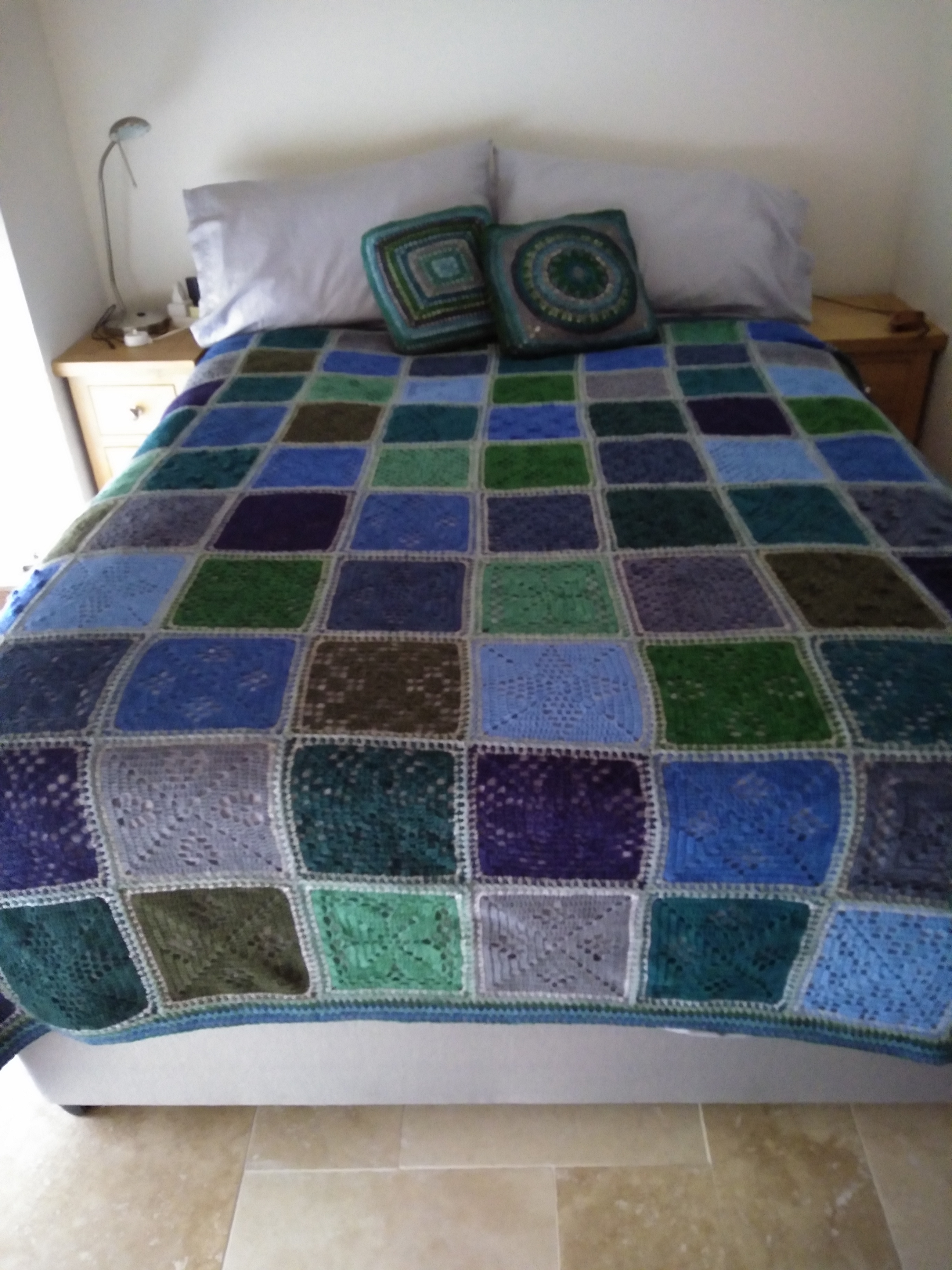
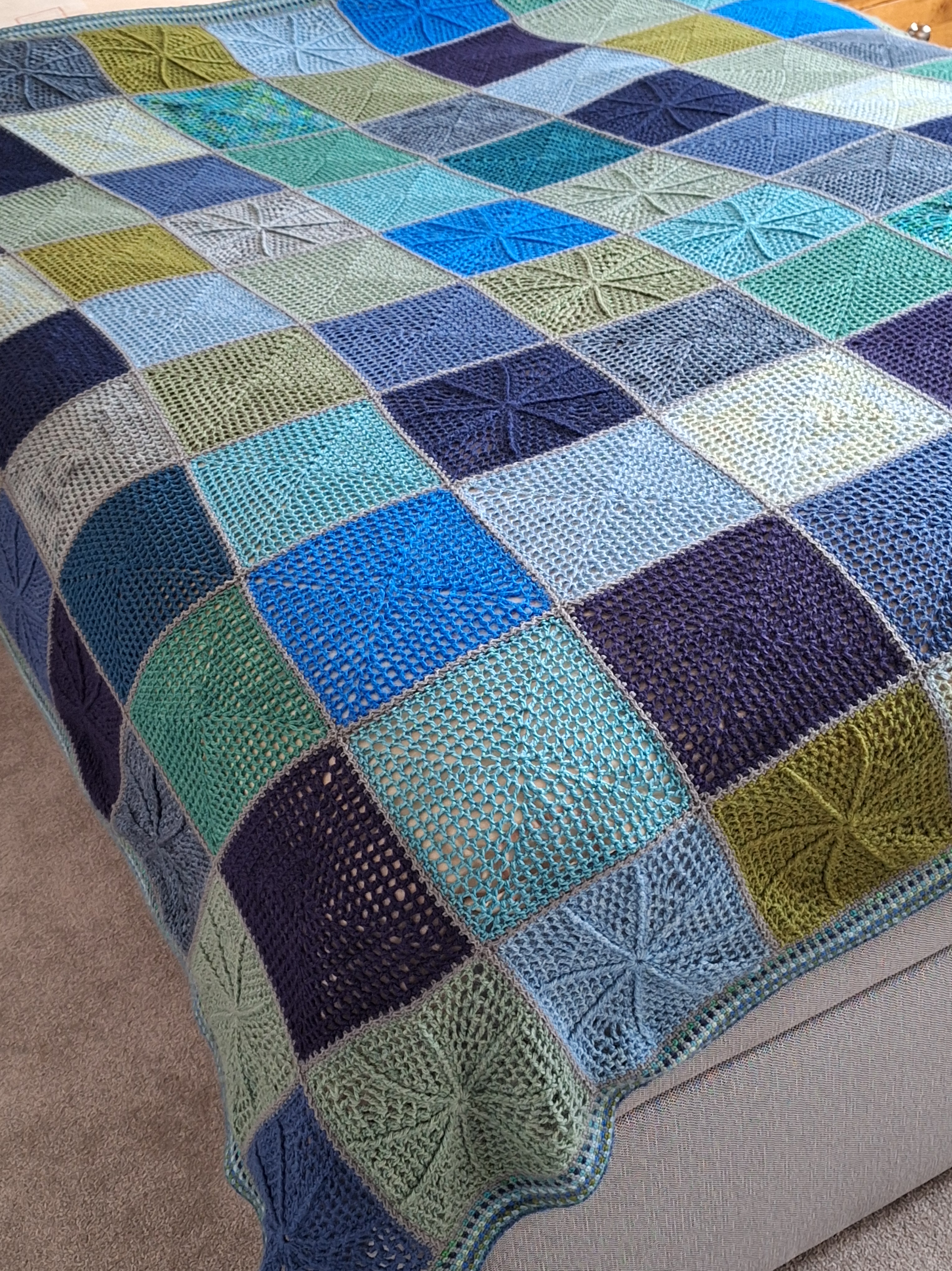
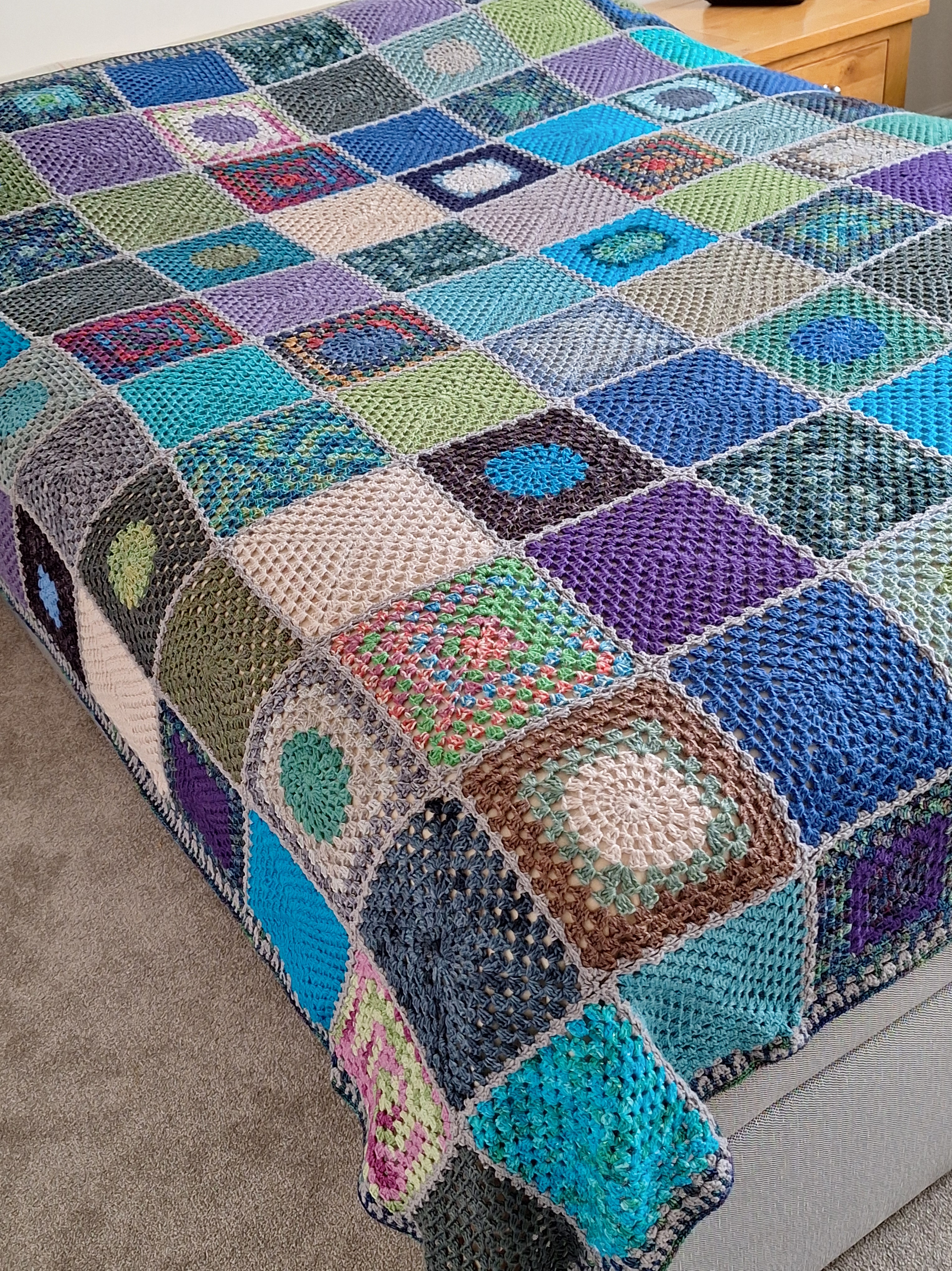
In case you need some inspiration on stashbusting blankets, here are some stash busting blankets I have made in the last 5 years.
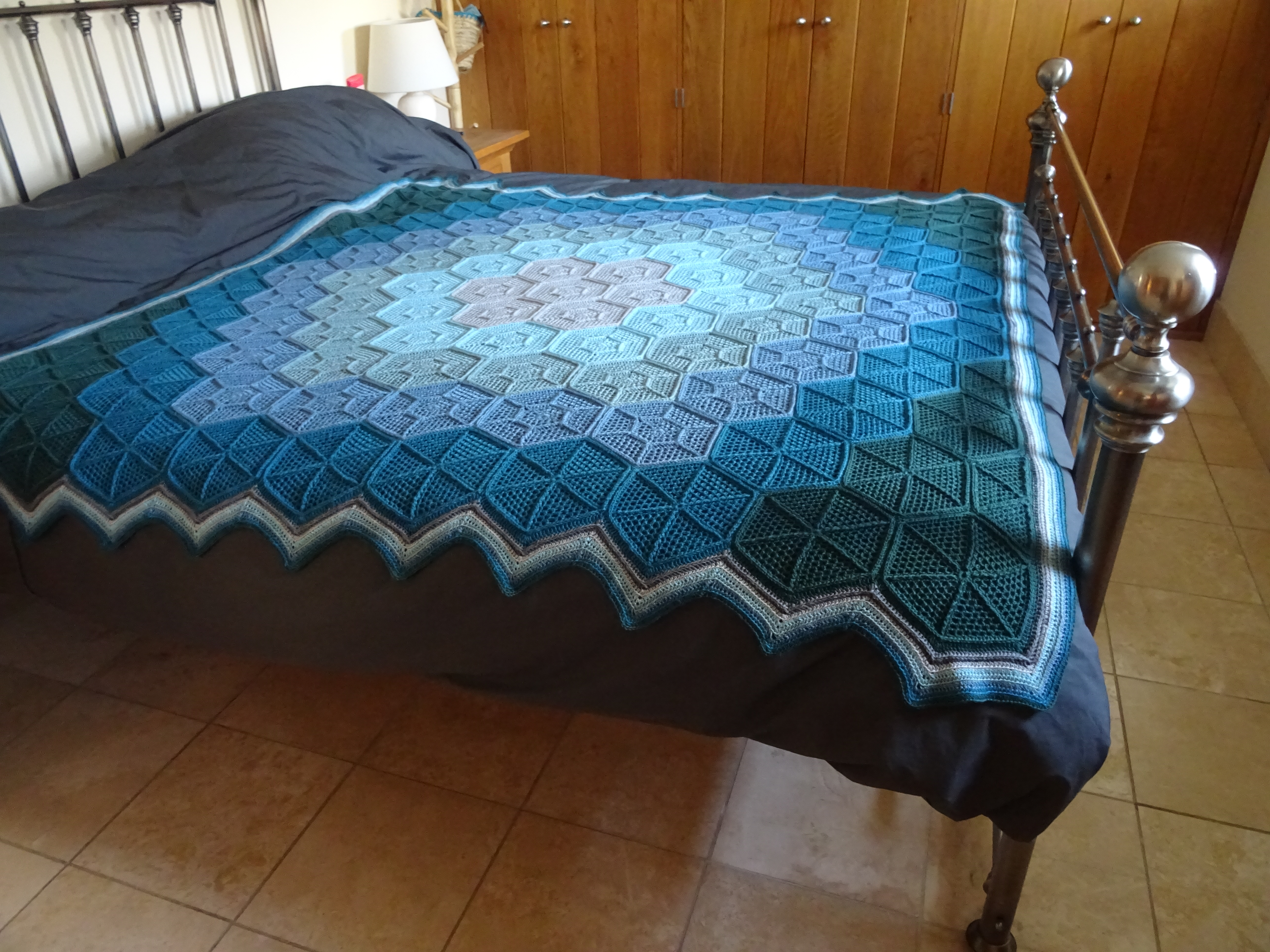
My Lockdown Blanket which I made in 2020 and was a fabulous way to use up some of my well-loved stash. The pattern I used was Nature’s Walk by CherryHeart but I used my own border.
My Ultimate Stash Blanket made in 2023. I used a couple of variations of some squares I designed (Octoghan and and a simple open square) and carefully recorded the yarn I used – over 5,000m of yarn!
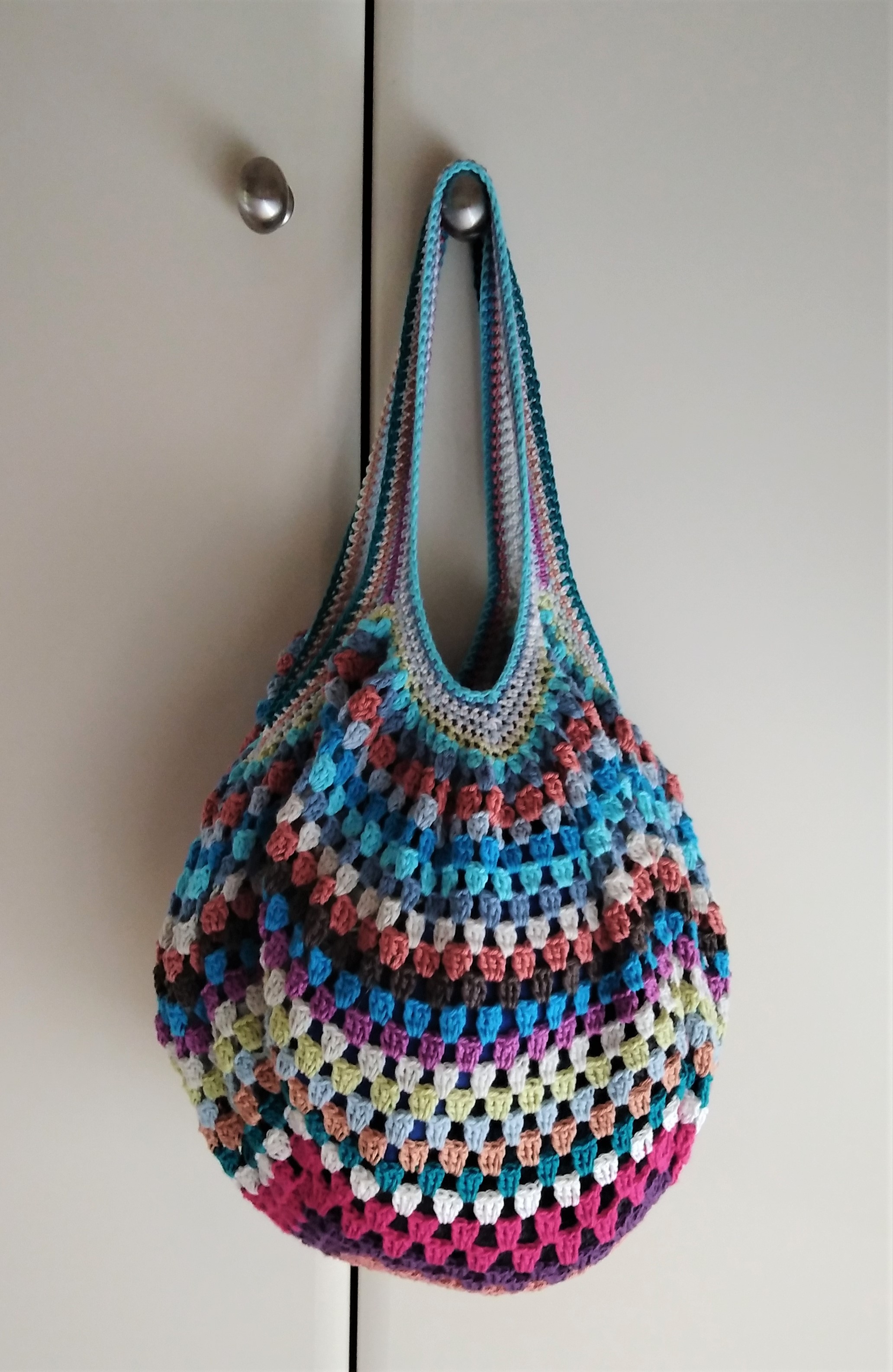
My Granny Stasher made in 2024. This was a real stash buster and you can tell from the colours that it’s mainly leftovers in this. I used 2 granny squares, one normal and the other with a circle in the centre, and this enabled me to use up so many little scraps of yarn.
The last one was made a year ago and I called it Mindless but Magic because I used a kit I had which was for a more complicated blanket and I just wasn’t in the mood to make it so wanted something mindless! I took a simple 3 row granny stripe and added an Attic24 border. It isn’t quite full double bed size but works well and was a satisfying and quick make.
You may have spotted a couple of things from my stash busting blankets but if not I’ll point them out. My favourite colours are blues and greens and I prefer to use luxury 4ply yarns, although the last blanket was in Stylecraft Special DK.
I hope this has inspired you a little and will help you next time you want to select a project to bust your stash!
I would love to know how and why you choose stash busting projects. As always you can comment on here, on Facebook or on Ravelry.
It’s been a while since I posted but I’m back now to wish all my lovely followers a Happy New Year! I hope 2025 is a good year for you, with health and happiness forefront.
I confess I have slowed in my designing over the last few years and have nothing new to share for you right now but to make up for that I now have a sale on Ravelry for the next 6 days. Until midnight GMT on 6th January 2025 you can receive 10% off my patterns on Ravelry (and only Ravelry) using code HNY2025. This is a single use code, so once you’ve used on a single purchase of one or more patterns you can’t use it again.
It’s been lovely sharing my gift bag designs with you over the last 10 days. Remember, if there are any designs you like then you can still get the free pattern until midnight GMT tonight (13t December 2023), check the blog posts from the last 10 days to find the coupon code.
Welcome to day 10 of the Advent CAL 2023 – the 10 Gift Bags of Christmas!
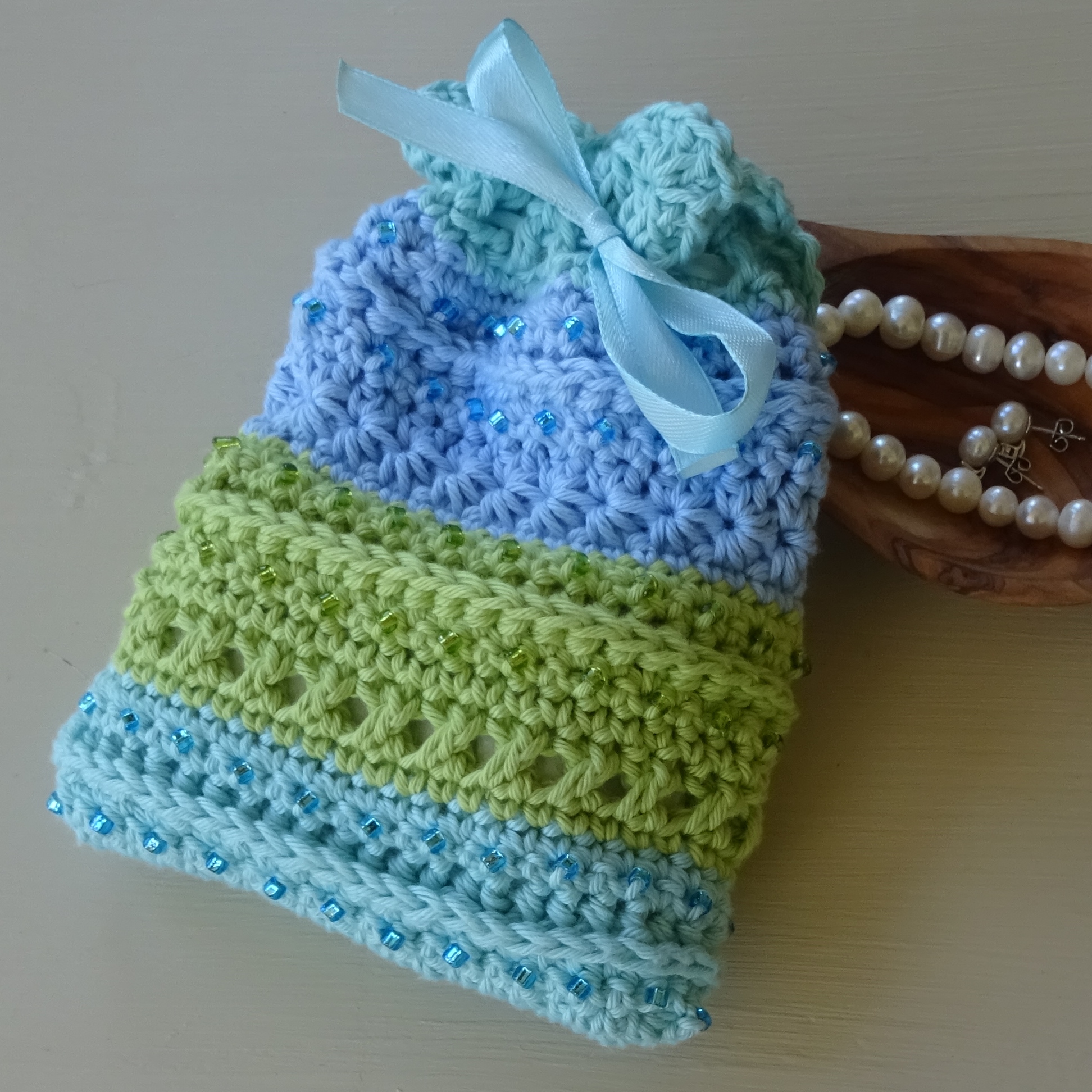
This is the last pattern in the CAL and is my first ever beaded crochet gift bag – published 9 years ago! It is another little beauty and I have made it several times. It is called the Beaded Crochet Pouch, not a very original name!
The pattern is available here and is free provided you use the code BEADS on purchase. All the patterns in the CAL will be available free for the duration of the CAL, until midnight GMT tomorrow 13th December 2023.
Welcome to day 9 of the Advent CAL 2023 – the 10 Gift Bags of Christmas!
This is the ninth pattern in the CAL and is another new design. This is made using the spike stitch to create a blocked pattern. It is made mostly in dc (sc for US terms) so takes a little longer than some gift bags. It is called the Spike Gift Bag.
The pattern is available here and is free provided you use the code SPIKE on purchase. All the patterns in the CAL will be available free for the duration of the CAL, until midnight GMT 13th December 2023.
Welcome to day 8 of the Advent CAL 2023 – the 10 Gift Bags of Christmas!
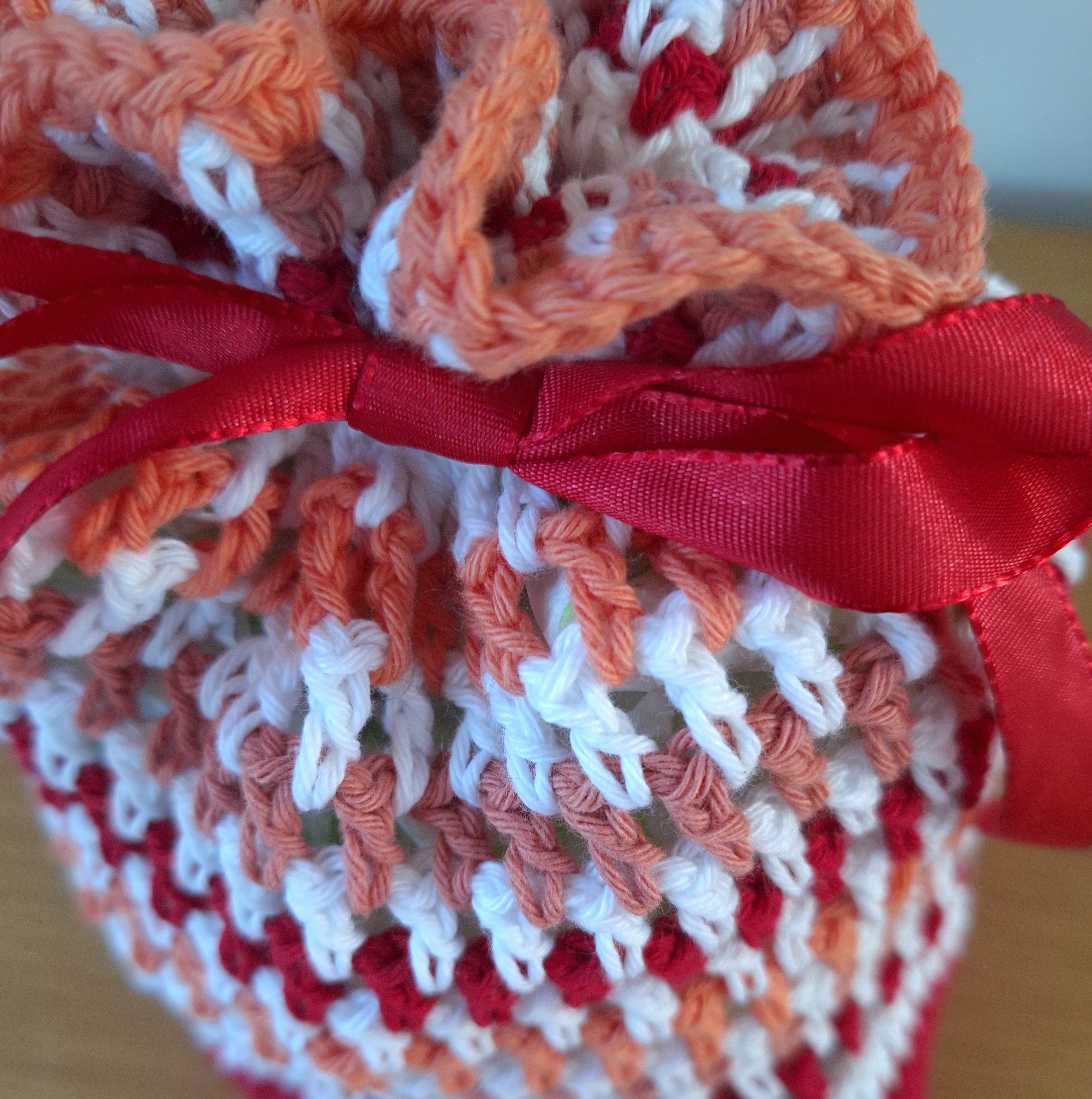
The eight bag is a new design, a little like the V stitch but a square shape and using a linen stitch. I find it quick to make up. It is called the Square Linen Stitch Bag.
The pattern is available here and is free provided you use the code LINEN on purchase. All the patterns in the CAL will be available free for the duration of the CAL, until midnight GMT 13th December 2023.
Welcome to day 7 of the Advent CAL 2023 – the 10 Gift Bags of Christmas!
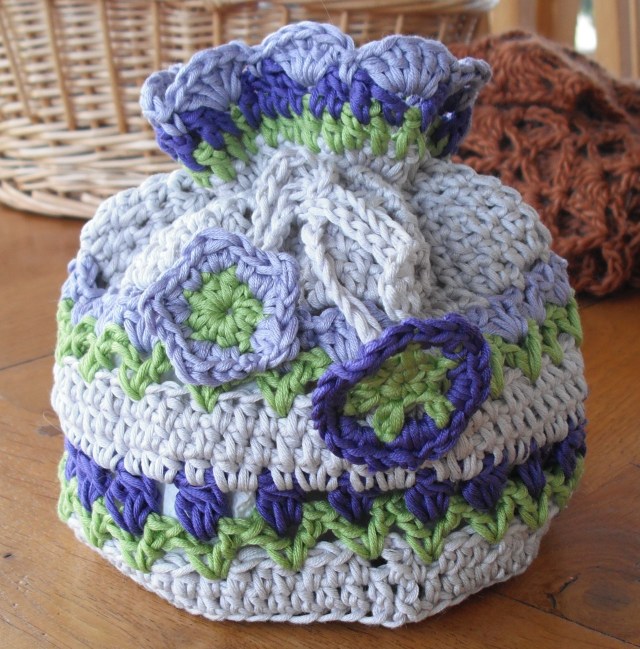
The seventh bag is one I published quite some time ago. It includes 2 rounds of tulip flowers. I think it is cute and colourful, and I would love to see some more colour variations. This is the St Davids Flower Bag.
The pattern is available here and is free provided you use the code TULIP on purchase. All the patterns in the CAL will be available free for the duration of the CAL, until midnight GMT 13th December 2023.
A crochet blog where you will find free crochet patterns along with oodles of crochet inspiration. Featured in top 100 crochet blogs and also in Crochet Now Magazine