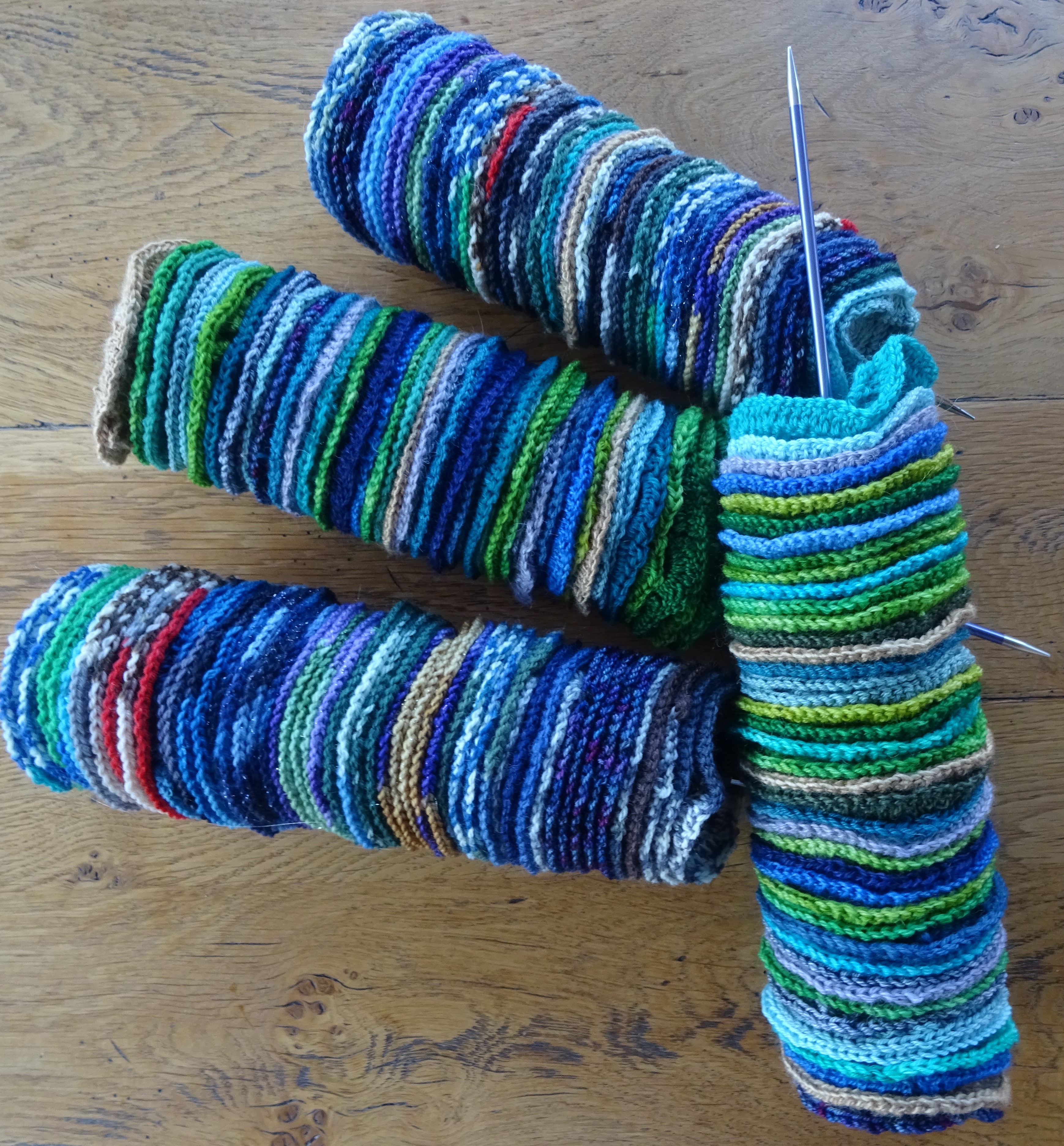
Crochet Blankets – from 10 years ago!

WARNING – THIS BLOG POST IS WORD HEAVY!

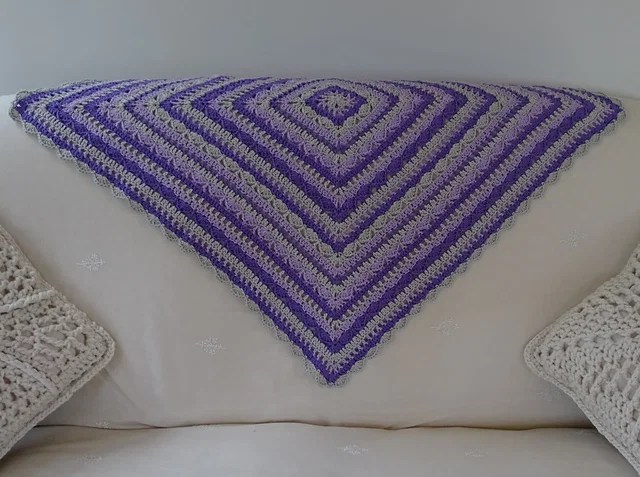
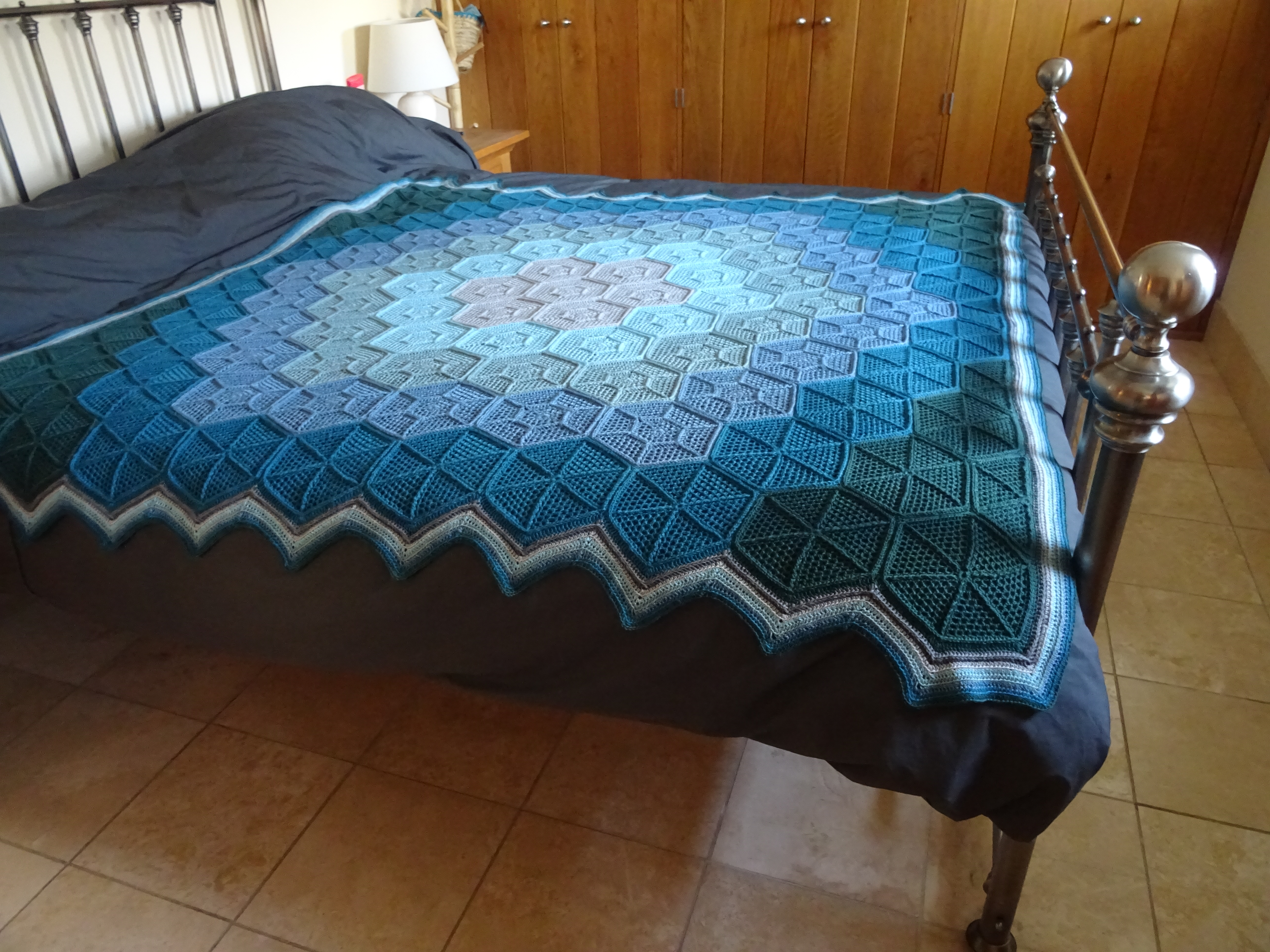
Way back in 2016 I held a workshop at the Cheshire Fibre Festival (I also co-organised the festival!) called Crochet Blankets; Stripes or Squares. I designed 2 blankets for the workshop both using the same stitch pattern, one was a stripe blanket the other a square blanket. They were called Sandlebridge Stripes and Sandlebridge Squares and you can find the patterns on Ravelry (Stripes and Squares) and on LoveCrafts.

Very recently someone made the most lovely comment on the Sandlebridge Squares pattern on Ravelry and it made me recall back to when I designed it. I offered her a copy of the workshop handout notes from 2016 and later that evening I thought ‘why not publish them on my blog?’. So this blog is a reproduction of those notes, although edited slightly to remove some of that workshop specific material.

It is very word heavy, but I’ve thrown in a few photos to break the monotony for you.

In the workshop I encouraged everyone to share their blanket making experiences and it was a lovely 2 hour workshop for me and, I hope, the attendees.
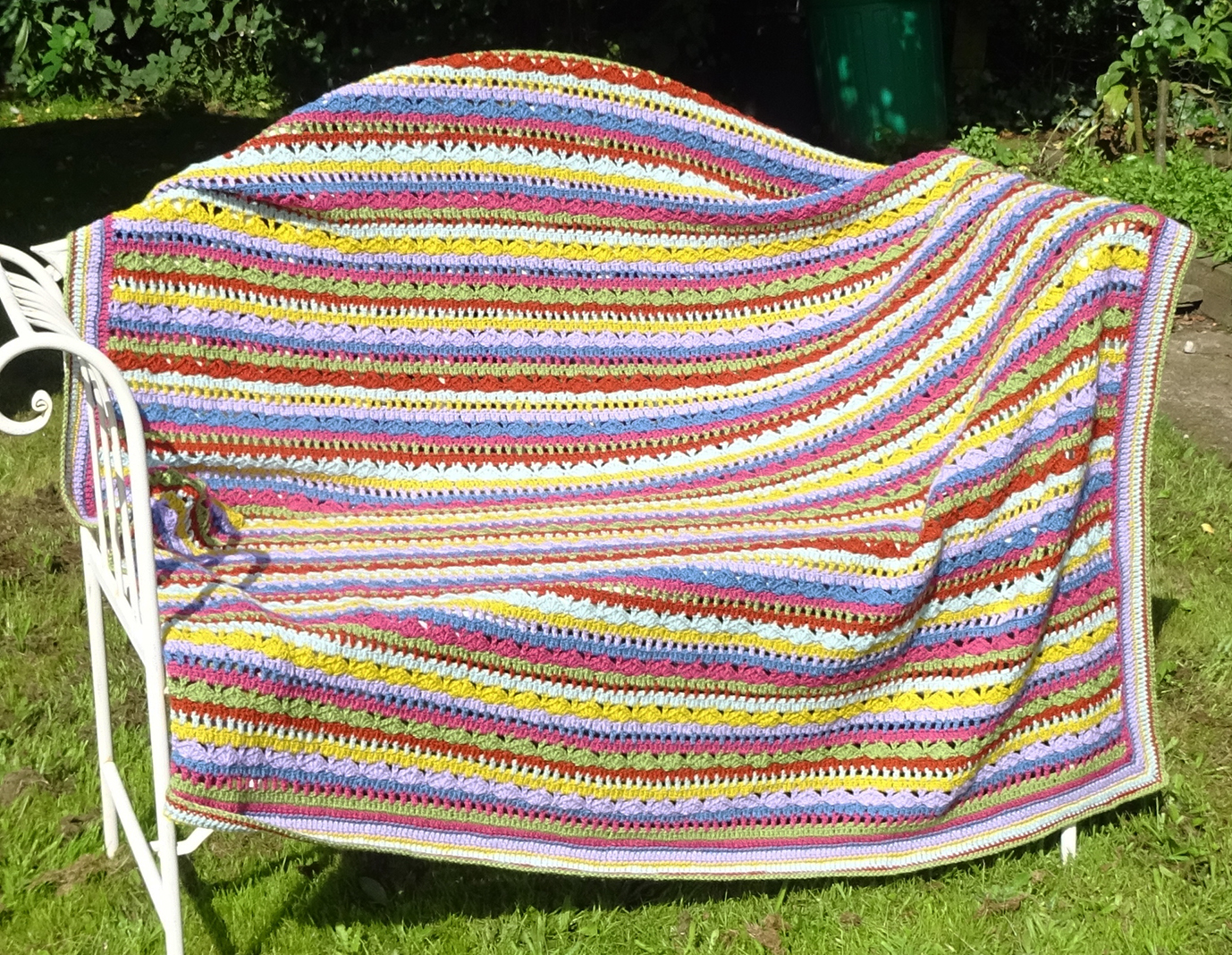
Sandlebridge Stripes

Here it begins:

Introduction

Crochet blankets are pretty, practical and very popular.  If you haven’t yet made one, you’re probably contemplating it.

Traditionally, granny square blankets used to be the most common type of handmade crochet blanket.  However, in the modern world crochet has moved the boundaries on from that tradition and now there is a wide choice of styles to choose from.  But which one is right for you?   It may not be the one you love to look at, because you may find it very tricky to make, or even boring!  But how do you know? 

Crochet blankets are a large investment in time and money, not to mention the space you need to store your project whilst making it.  So this workshop is aimed at showing you the things to consider when choosing your crochet blanket, to help ensure it does not end up hidden in a cupboard half-made, unloved and taking up precious space.

It covers yarn, ease of making and style.  The 3 main styles of blanket are stripes, a large crochet square and lots of smaller crochet squares.  There are other styles but the pros and cons of each style will fall into one of these 3 main categories, for example hexagonal motif blankets will prove similar to small squares blankets.

I’ve designed more than a dozen blankets and made more than double that, so I have significant experience.  And funnily enough, until recently, the vast majority of the blankets I made were made of squares!

I designed 2 blankets, Sandlebridge Stripes and Sandlebridge Square(s) patterns, which are used in the workshop to demonstrate the pros and cons of style, and I included the basic granny square pattern, the basic granny stripe pattern and the basic corner to corner pattern, but not in these notes for the blog.

Crochet Kit

You don’t need anything special to make blankets, just your usual crochet kit which should include hooks, scissors, tapestry needle, solid ruler and lockable stitch markers. But you will need a large project bag or tub, and have a good way of organising your yarn if you are using lots of colours.  And if you’re using stash a set of small scales will be handy for weighing your yarn and how much you are using as you go.

Size

Crochet blankets can be any size you like from a small baby blanket to a huge queen size bed blanket (and larger!).  Here are some typical sizes:

Baby car seat – 40 by 50cm

Baby  – 60 to 70cm square or rectangular

Lap blanket  – from 80cm square

Single bed  – from 1.1m to 1.3m wide by 1.7m to 2m long

Double bed – from 1.45m to 1.6m wide by 1.7m to 2m long

King size bed – from 1.6m to 1.8m wide by 1.9m to 2.2m long

Yarn

You could use absolutely any yarn, either in base quality (eg merino, silk, acrylic) or thickness (4 ply, dk, aran).  If you are following a pattern then you will be guided, but you may be making a blanket to your own design or even adapting a pattern.  However, the end result may not be right if you don’t select your yarn carefully.

If you consider base quality – what is the blanket to be used for?  

For example, a baby blanket may need to be in a strong yarn, able to withstand wear, plenty of washes and with colour that is fast – acrylic would be good, as would cotton. 

An heirloom blanket, which will be lovingly cared for, with a lovely pattern would benefit from a yarn with good stitch definition, a good quality merino 4 ply may suit. 

And do you want to make it quickly?  If so aran weight, chunky or super chunky would work well.  Just remember the finer the yarn the longer it will take to make.

A good all round yarn is one that washes well, makes up reasonable quickly and has good colourfastness.  And Stylecraft DK is one that is favoured by many – it is good quality and affordable.

Typical quantities of Stylecraft Special DK for blankets:

TypeSizeQuantity (100g balls)
Baby car seat40 x 50cm2
Baby70cm x 70cm3
Lap blanket1m square6
Small bed1.1m by 1.8m12
Double bed1.5m x 1.8m15
King size bed1.8m x 2m20

If you are using several colours, then divide the amount by the number of colours and add a good margin, say 20-25%.

Colour

Colour tends to be personal choice, and that choice is many and varied, but you don’t need to have lots of colour.  A single colour blanket can look stunning.  

There are lots of resources available in books and on the internet about colour theory, which will help you with colour choice.

If you have difficulty choosing then there are lots of colour packs available from yarn suppliers and plenty of designers to take inspiration from.

Style

Some people like stripes, some people like squares.  Which do you like and why?   Or do you have no preference?   Whatever it is, remember that any stitch pattern can be done in a square or in a stripe.   So if you find a stitch pattern you like and it is in stripes, you can adapt it to squares if you want to (and vice versa), it just takes a bit of experience.

Blanket styleProsCons
  Stripes  Rhythm of repetition is soothing and therapeutic.  
Colourwork is also very therapeutic.   Stripes look fantastic!  
For some this repetition can be  boring.   There can be lots of ends to sew   Sewing ends at both sides of the blanket, or in some cases mainly one side of the blanket can make it uneven.  
The edge can be difficult and messy to set up  
The larger it gets the less portable it is  
  Large square  Good rhythm, especially as it gets large. Good opportunity for colour therapy.   The edge takes care of itself  Lots of ends to sew, if using lots of colour  
The larger it gets the less portable it is.
  Small square  Portable (although join as you go squares may not be depending on your joining routine)  
Good opportunity for colour therapy.   The edge is easy to set up, and sometimes not necessary    
Not so good rhythm  
Joining  
Sewing ends  
Unless it’s join as you go, then best to block before joining.  
Sandlebridge Squares

Layout

Layout can be anything you like, and absolutely anything goes.  However, if you want variety in your crochet look for a layout that isn’t all the same – mix and match squares/motifs and stripes.   Some graph paper may help you.
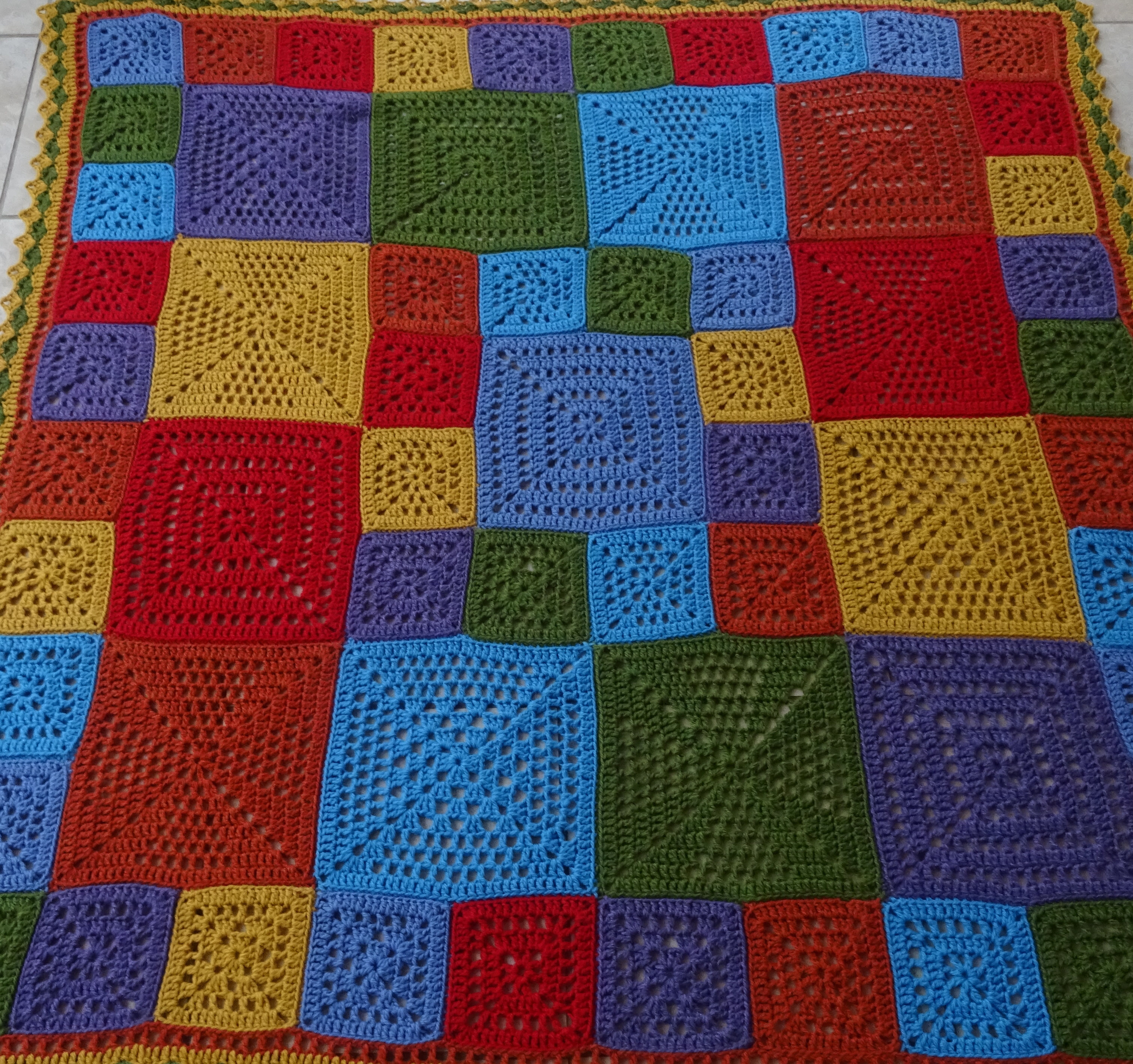
A blanket design from 2015 where I used different sized squares to vary the layout

Ease of pattern

If asked what my choice of easy and quick blanket to make would be, then the answer is simple – in aran weight, a large granny square and in one colour!  This is because aran weight makes up quickly, I find granny squares easy and not as boring as stripes (I have a low boredom threshold) because there are 4 corners to stop and change rhythm, there are fewer ends to sew and the edge takes care of itself.    But this is my choice, I know that I like to make blankets quickly and I know where my boredom threshold lies J

When considering ease of pattern here are a few other things to think of:

The easiest sts to make are in spaces (such as a granny st which works most sts into a 1ch space) – so if you want a quick make or are an inexperienced crocheter, you would use these.  Even a stripey blanket with a repetitive pattern can be made easy with a pattern that works in spaces (such as a granny stripe).

Do you want to crochet quietly and enjoy a challenge?  Or do you want to crochet your blanket in front of the tv, on the train, in the car (as a passenger), at knitgroup? 

These will determine the complexity of the pattern you should try; a complex pattern will require concentration and may prove a challenge – but do something simple in front of the tv (you don’t want to frog often!).

Do you get bored easily?  You need more variety and complex patterns, maybe something that has lots of rows/rounds of pattern rather than the same row/round repeated.

Do you lack crochet confidence?  Aim for a mix of easy and slightly more complex, the easy parts will give you confidence and the slightly more complex parts will stretch you a little.

Remember:  always do a swatch to see whether you like the pattern!

The Edge

The more fancy the blanket pattern, the simpler the edge should be.   But a plain blanket can withstand a very fancy edge or a simple plain edge.

If you have a stripe blanket, try to avoid doing the first round of the edge in the same colour as the first and last row, to avoid the blanket stripes appearing unbalanced.    Also if you are using lots of colours in your blanket but want only a few for the edge, don’t choose them in exactly the same order, take, say, 3 colours from across the range, otherwise you may get a ‘multi-framed’ effect.

Dealing with the edge on stripes – normally pick up 2 sts at the end of tr rows and 1 st at the end of dc rows.  Also, to avoid holes at the side of the stripes, make sts into the row ends NOT around the posts of the row ends.

Joining

There are many ways of joining squares, and they warrant a whole workshop!    Whatever way you decide to join, it is best to trial it first to ensure you are comfortable with the process, you want to be able to join it at the end and if you don’t like the process the blanket may languish unfinished!

Tips and tricks

The ends – Sew your ends as you go because this will give the neatest finish.  With stripes you can even work over them as you start a new colour, but for a solid finish I recommend sewing them a little first before working over them.  If you don’t like sewing ends, change colour less frequently – i.e broader stripes or one colour squares.  Even numbers of rows of one colour will result in all ends at one side of the blanket – so choose odd numbers to even out the ends.

Standing stitches – If you are an experienced crocheter, you may wish to start rows/rounds with new yarn with a standing stitch rather than 3ch, 2ch etc.  This will give a better finish.  

Sewing the last stitch (on rounds or on the edge) – Similarly, you will achieve a better finish if you sew the last part of the last st on a colour change round rather than join the round with a slip stitch.    

Avoiding jogs (on rounds) – To avoid getting a jog (or twist) try starting your rounds in different places and thus also offsetting the location of the ends that you need to sew.

Hook changes – If you want to do a certain st on a row/round and it’s puckering or tightening – just change your hook size – larger to correct tightening and smaller to correct puckering.

Have scales handy – weighing your yarn to see how much a stripe or square uses will help you in identifying whether you have sufficient to finish or maybe just make that blanket a tad larger.

Pace yourself – crochet injuries are rare but too much crocheting can result in tired, arms, wrists, hands, shoulders and back.   But if you have a tight timescale in which to make the blanket, use maths to work out how much you should do each day, and work out whether you can manage that comfortably.

Join as you go squares – If doing small squares that are join as you go, they can be less portable.  But you could work each square up to the last round and join later – or do all rounds without joining and don’t fasten off, instead undo part of the last round and join in a joining session.

I hope you find these notes helpful and they encourage you to maybe be a bit more adventurous in choosing your next blanket project. If you want to see my crochet blanket designs you can find them here.

I also did a workshop on mandalas and those notes may well be published here soon! Until then…….

Happy crocheting xxx
Happy New Year!

It’s been a while since I posted but I’m back now to wish all my lovely followers a Happy New Year! I hope 2025 is a good year for you, with health and happiness forefront.

I confess I have slowed in my designing over the last few years and have nothing new to share for you right now but to make up for that I now have a sale on Ravelry for the next 6 days. Until midnight GMT on 6th January 2025 you can receive 10% off my patterns on Ravelry (and only Ravelry) using code HNY2025. This is a single use code, so once you’ve used on a single purchase of one or more patterns you can’t use it again.

Happy crocheting and knitting in 2025!

Advent CAL 2023 – part 10

Welcome to day 10 of the Advent CAL 2023 – the 10 Gift Bags of Christmas!

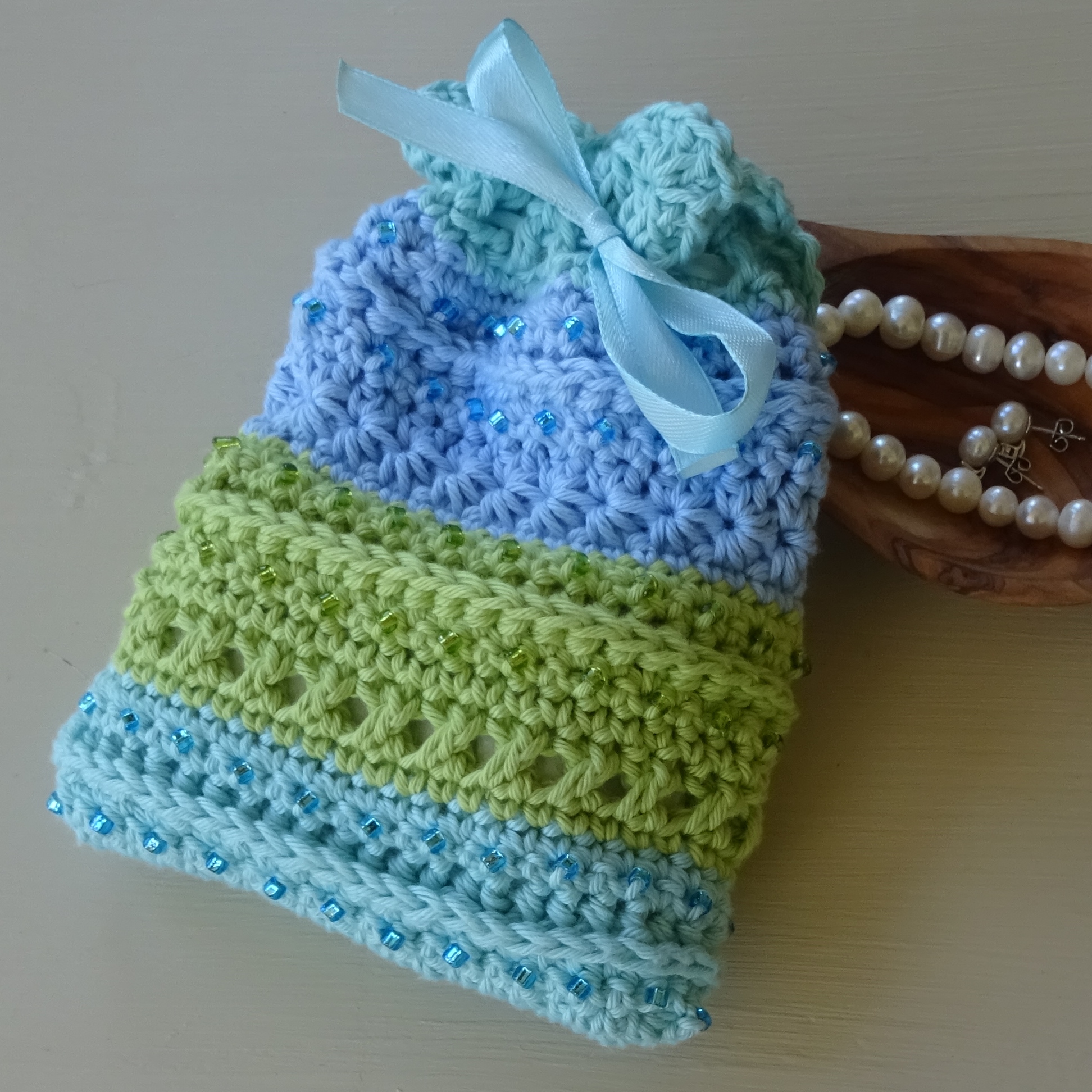
This is the last pattern in the CAL and is my first ever beaded crochet gift bag – published 9 years ago!  It is another little beauty and I have made it several times. It is called the Beaded Crochet Pouch, not a very original name!

The pattern is available here and is free provided you use the code BEADS on purchase.  All the patterns in the CAL will be available free for the duration of the CAL, until midnight GMT tomorrow 13th December 2023.

I hope you enjoy making this gift bag.  Please share progress on Ravelry, Facebook or Instagram.

I can’t believe this is the last day!!!

Happy crocheting xxx

Advent CAL 2023 – part 9

Welcome to day 9 of the Advent CAL 2023 – the 10 Gift Bags of Christmas!

This is the ninth pattern in the CAL and is another new design.  This is made using the spike stitch to create a blocked pattern.   It is made mostly in dc (sc for US terms) so takes a little longer than some gift bags.  It is called the Spike Gift Bag.

The pattern is available here and is free provided you use the code SPIKE on purchase.  All the patterns in the CAL will be available free for the duration of the CAL, until midnight GMT 13th December 2023.

I hope you enjoy making this gift bag.  Please share progress on Ravelry, Facebook or Instagram.

Until tomorrow, happy crocheting xxx

Advent CAL 2023 – part 7

Welcome to day 7 of the Advent CAL 2023 – the 10 Gift Bags of Christmas!

The seventh bag is one I published quite some time ago.  It includes 2 rounds of tulip flowers.  I think it is cute and colourful, and I would love to see some more colour variations.  This is the St Davids Flower Bag.

The pattern is available here and is free provided you use the code TULIP on purchase.  All the patterns in the CAL will be available free for the duration of the CAL, until midnight GMT 13th December 2023.

I hope you enjoy making this gift bag.  Please share progress on Ravelry, Facebook or Instagram.

Until tomorrow, happy crocheting xxx

Advent CAL 2023 – part 2

Welcome to day 2 of the Advent CAL 2023 – the 10 Gift Bags of Christmas!

The second bag is my go to style for a quick bag.  I call it the V Simple Gift Bag

I’ve been making variations of this for some time.  

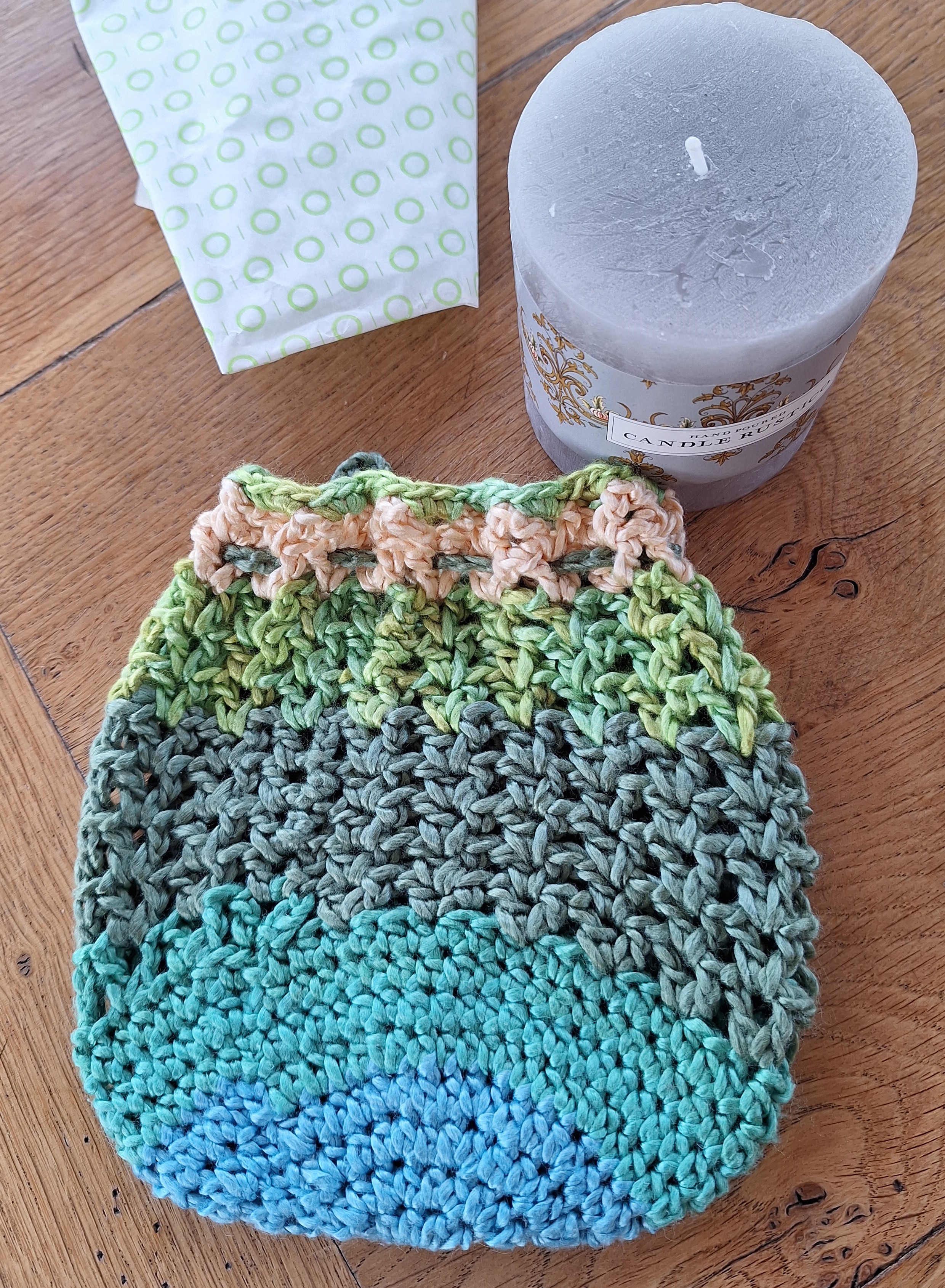
It is also perfect for using leftover yarn and that’s exactly what I used for one of the samples I made for the CAL.  And it’s easy to vary this by making a larger base or higher sides. This sample was slightly smaller and used 6 different colours of leftover silk yarn, perfect for wrapping a candle

The pattern is available here and is free provided you use the code VSTITCH on purchase.  All the patterns in the CAL will be available free for the duration of the CAL, until midnight GMT 13th December 2023.

I hope you enjoy making this gift bag.  Please share progress on Ravelry, Facebook or instagram.

Until tomorrow, happy crocheting xxx

Advent CAL 2023 – part 1

Welcome to the Advent CAL 2023 – the 10 Gift Bags of Christmas!

I have indulged myself far too much over the years by crafting presents and do not wish to repeat them.  But I can still indulge myself by crafting gift bags.  This has many benefits including helping reduce my stash of leftover yarn and ensuring my gift bags fit the gifts by tailoring them to size. The bags are all pretty enough to be kept or re-used for another recipient, so I get plenty of satisfaction when making them. This CAL gives me the opportunity to share the gift bags I’ve designed over the years.

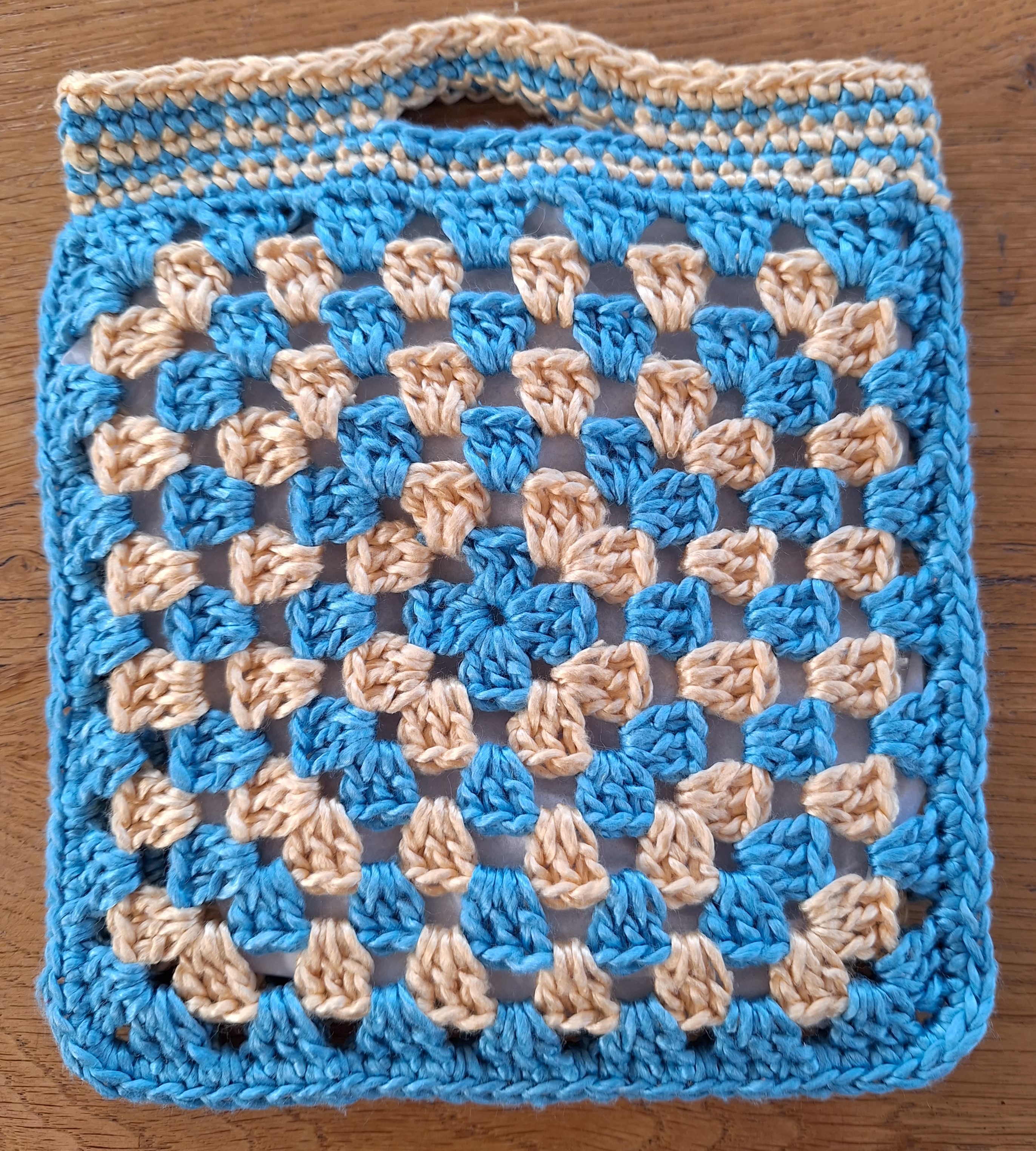
Each day for the next 10 days I will present to you a crocheted gift bag.  I’m starting the CAL with a gift bag that I think is easy.  I originally designed this to use up some of my extensive stock of afghan square samples from my designs over the years.  I never like to waste them and using them in a gift bag is a perfect use for them.  However to show you how to make one I designed a straightforward Granny Square Gift Bag.

I made this one in silk so it has a lovely sheen.  The pattern is available here and is free.  All the patterns in the CAL will be available free for the duration of the CAL, until midnight GMT 13th December 2023.

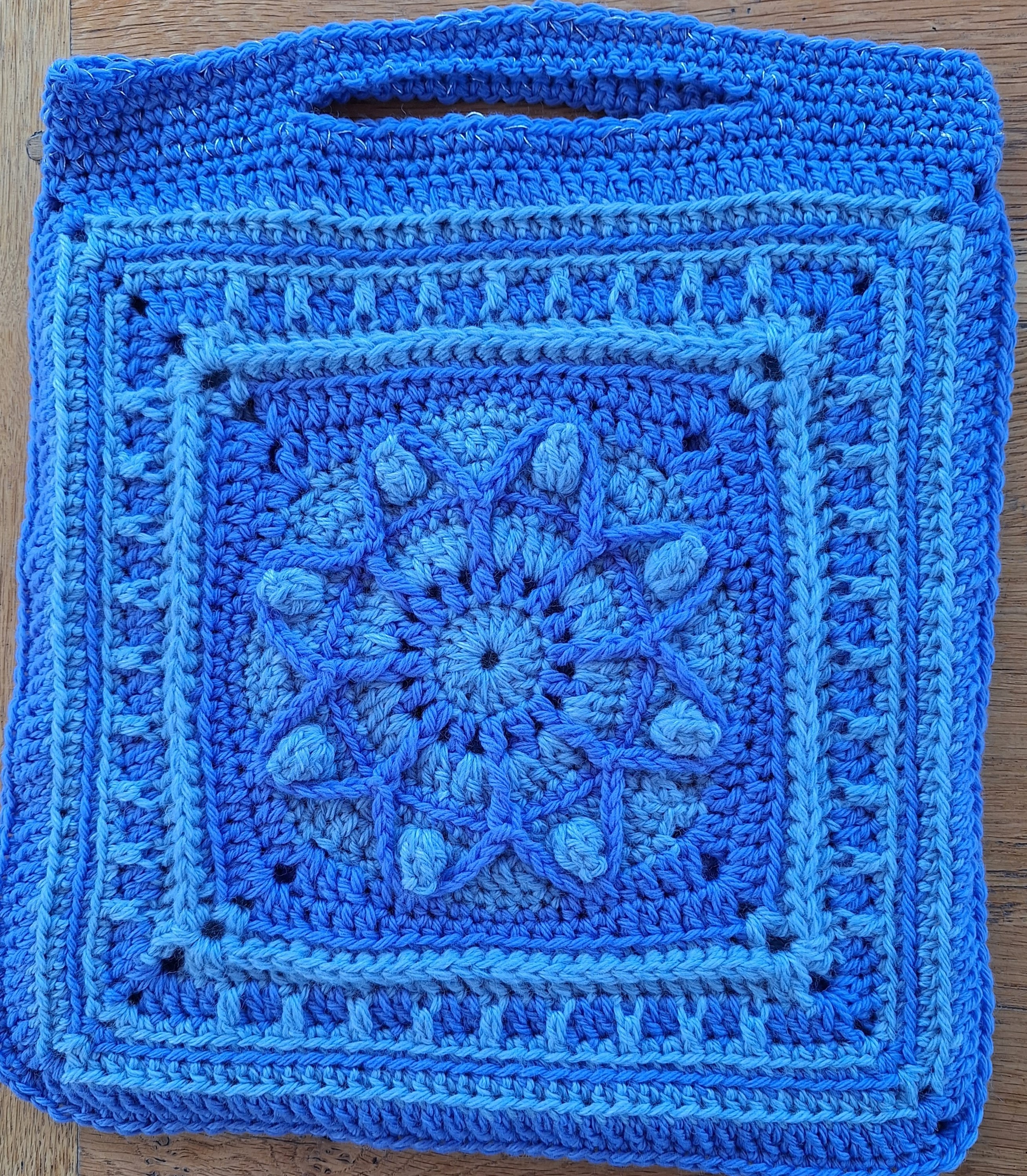
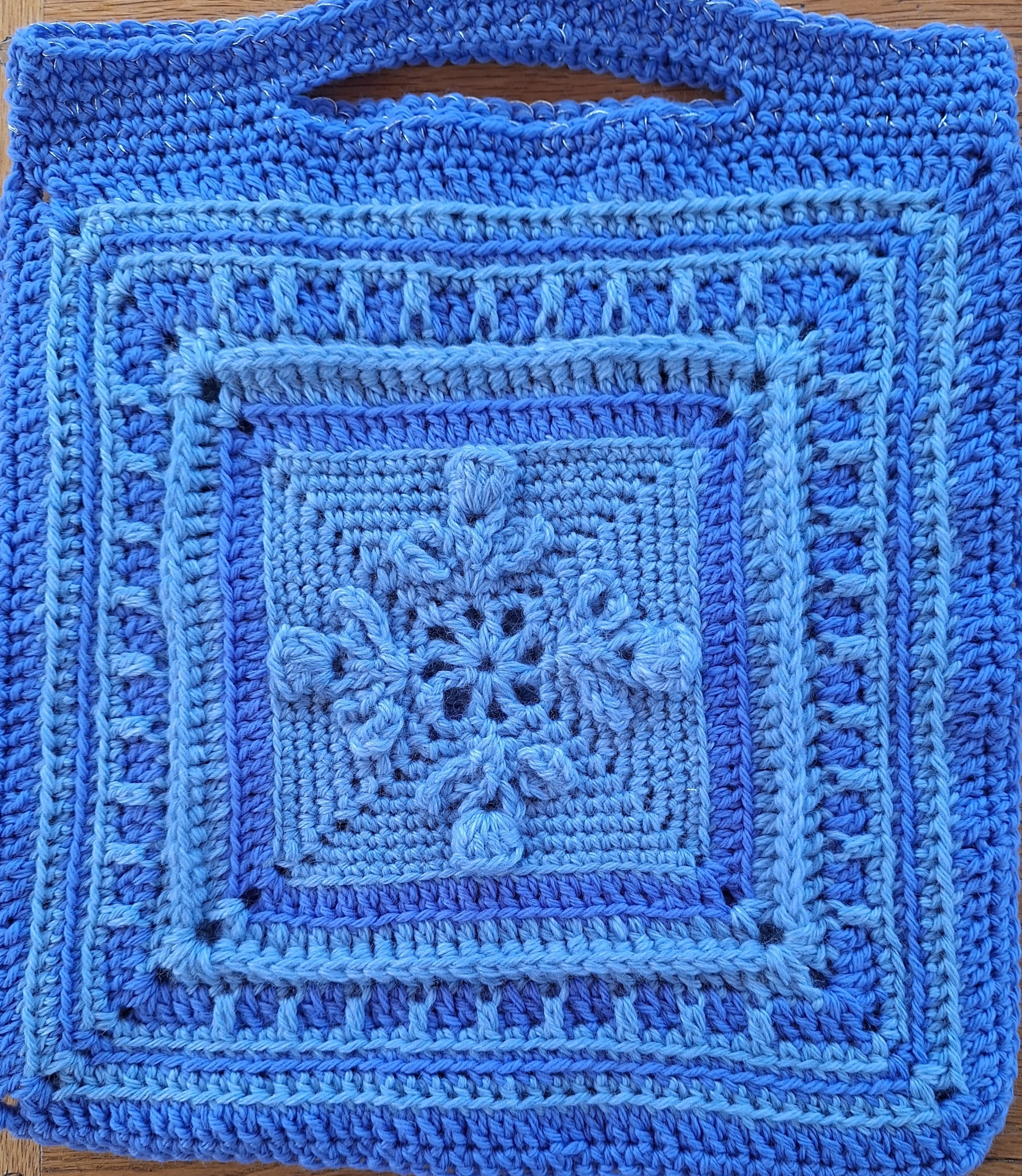
The concept of making this bag is the same for any pair of afghan squares.   I made a lovely small project bag (not a gift bag!) using my Highland Sunburst and Thistle squares designed for Friends Around the World.  

And a tip – you can add a touch of sparkle by holding your yarn together with a strand of metallic sewing thread.  Just look at this: 

I hope you enjoy making this gift bag, Please share progress on Ravelry, Facebook or even instagram (I confess I locked myself out of my original account so I have a newer one here).

Until tomorrow, happy crocheting xxx

I’m still here!

I’m so sorry that I have been quiet for the last 10 months, I’m still here but I haven’t had much to say!

Like many people, I’ve had plenty of time for reflection in the last few years. I’ve analysed my design work and realised that, even though I love it, I had become a slave to it. I spent too many hours making items I designed, writing patterns, drawing charts, organising testers and tech editors, and then publishing, promoting and, the most time-consuming, running CALs. I decided the best thing I could do for me is to slow right down and that is exactly what I have done. I confess I like it!

So designs have been minimal and I haven’t even got round to publishing them yet. But I have spent time decluttering and organising. I’ve also used my making time to make things for me, in particular socks which have become one of my easy makes. These are mainly knitted but I have spent time trying to find a great crochet sock – my favourite so far is Riley and Saunders by Joanne Scrace, written for both DK and 4ply yarn in a wide range of sizes.

Over the years, I’ve built a lot of personal stash and, as you will know from previous posts, I have tried to reduce this and did a good job for a while but I need to be more rigorous. So I’ve sorted some stash to sell (this was a hard decision!) and started to advertise it (slowly). So far I’ve advertised only on a facebook group but I may spread further. I’ve also realised that my WIPs have got out of hand so they are having some well deserved love. I’ve pulled out a Cloud Line Wrap that I started last May using some luxury stash yarn and I’m halfway through.

I’m using 4ply yarn in 4 colours and a 4mm hook. I haven’t decided how much of a fringe I want so I’m leaving some lengthy ends. I will do 19 or 20 repeats of the 4 colours using up virtually all the yarn.

I’m keeping some of my precious stash for my own use. I have 6 skeins allocated for more socks and 9 skeins in blues and greens which I may turn into an easy and, hopefully, quick blanket. This may turn into a CAL so watch this space.

Something that will be a CAL is a bag. This will be in blues and greys and will be very similar to the Spring Lifter. This may well emerge later this month 🙂

So I’ve just committed myself to a CAL and there’ll be another blog post soon.

In the meantime, happy crocheting xxx

Round Again CAL – Part 5

Have you made all your circles yet? Don’t worry if you haven’t, just go at a pace that is right for you. But if you have finished you can now start joining.

The pattern here is written in UK crochet terms and these are the abbreviations used

st(s) stitch(es)

ch ch

dc double crochet

tr treble

htr half treble

dtr double treble

ss slip stitch

ch-sp chain space

The motifs are joined as you go, with a final round in your joining colour.  I used a mid grey sock yarn.

Make all the circle motifs first, then lay them out in your blanket shape, moving them around until you have a colour scheme you like.  Then photograph them to remind you of your layout.  You may also wish to thread them onto a knitting needle in the reverse order you will join them.  Either one long circular needle or one needle per row of blanket.

The final round is the same for all motifs and you will end with 24 2ch-sps and 4 3ch-sps.  The motifs are joined at all these ch-sps.

First Motif Final Round: join yarn into any st (for Circle 7 it is best to join into a dtr), 1ch (does not count as st), *1dc, 2ch, miss 2 sts, 1htr, 2ch, miss 2 sts, 1tr, 2ch, miss 1 st, (1dtr, 3ch, 1dtr, 2ch) in next st, miss 1 st, 1tr, 2ch, miss 2 sts, 1htr, 2ch, miss 2 sts; rep from * to end of round, ss to 1st dc to join, break yarn and fasten off.

Start by joining the first row of motifs along the top of your blanket.

As with many join as you go methods, for each ss join insert the hook from the right side (front) through to the wrong side (back) of the motif you are joining to.

Complete your first motif with the final joining round. Then work the final round of the second motif, joining on one side of the first at 8 points as follows:

Final Round: join yarn colour into any st, 1ch (does not count as st), *1dc, 2ch, miss 2 sts, 1htr, 2ch, miss 2 sts, 1tr, 2ch, miss 1 st, (1dtr, 3ch, 1dtr, 2ch) in next st, miss 1 st, 1tr, 2ch, miss 2 sts, 1htr, 2ch, miss 2 sts; rep from * once, 1dc, 2ch, miss 2 sts, 1htr, 2ch, miss 2 sts, 1tr, 2ch, miss 1 st, (1dtr, 1ch, ss into 3ch-sp on first motif, 1ch, 1dtr) in next st, 1ch, ss to next 2ch-sp on first motif, miss 1 st, 1tr, 1ch, ss in next 2ch-sp on first motif, miss 2 sts, 1htr, 1ch, ss in next 2ch-sp on first motif, miss 2 sts, 1dc, ss in next 2ch-sp on first motif, 1ch, miss 2 sts, 1htr, ss in next 2ch-sp on first motif, 1ch, miss 2 sts, 1tr, ss in next 2ch-sp on first motif, 1ch, miss 1 st, (1dtr, 1ch, ss in 3ch-sp on first motif, 1ch, 1dtr, 2ch) in next st, miss 1 st, 1tr, 2ch, miss 2 sts, 1htr, 2ch, miss 2 sts, ss to 1st dc to join, break yarn and fasten off.

Continue in this way, joining the motifs across rows and then adding new rows on the bottom.   For motifs from the second row onwards most will have to be joined along 2 sides, just follow the same techniques as you join.  When joining into previously joined corners I prefer to place the ss into the space between the motifs that are already joined and over the previous ss join to secure it.

Don’t forget there is a paid for pattern on Ravelry which is also being released in parts and has a US crochet terms available too. It also includes some charts for the joining round.

I would love to see photos of your little circles, please share them on Facebook and Ravelry. Next week is the border.

Until then, happy crocheting xxx

All patterns and photographs are copyright

Round Again CAL – Part 4

How did you like the ruffles last week? They are surprisingly easy to make and add some lovely texture. This week for our last circles we are adding a little lace, but I love the ruffles so much that I decided I should combine them into other circles as well!

The pattern here is written in UK crochet terms and these are the abbreviations used

st(s) stitch(es)

ch ch

dc double crochet

tr treble

htr half treble

dtr double treble

ss slip stitch

ch-sp chain space

PART 4

Circles 7 and 8 are lacy, again useful for single colour yarns.  They use roughly the same amount of yarn as Circle 1.

Circle 7 – lace

Foundation: 4ch, join into a ring with a ss.

Round 1: 1ch (does not count as st), (1dc in ring, 4ch) 7 times, 1dc, 2ch, 1htr in 1st dc to join (the 2ch, 1htr forms the last 4ch-sp).   [8dc, 8 4ch-sps]

Round 2:  1ch (does not count as st), (1dc in 4ch-sp at base of ch, 2ch, (1dc in next 4ch-sp, 2ch) 7 times, ss in 1st dc to join.  [8dc, 8 2ch-sps]

Round 3: ss in 1st 2ch-sp, 3ch (counts as 1tr), 3tr in same 2ch-sp, 4tr in each remaining 2ch-sp around, ss in 3rd ch from start to join.  [32tr]

Round 4:  1ch (does not count as st), 1dc in sp before 1st tr, 5ch, (1dc in next sp between 2 groups of 4tr, 5ch) 6 times, 1dc in next sp between groups of 4tr, 2ch, 1tr in 1st dc to join (the 2ch, 1tr forms the last 5ch-sp).  [8dc, 8 5ch-sps]

Round 5:  1ch (does not count as st), (1dc in 5ch-sp at base of ch, 5ch, (1dc in next 5ch-sp, 5ch) 7 times, ss in 1st dc to join.  [8dc, 8 5ch-sps]

Round 6: 4ch (counts as 1dtr), 7tr in next 5ch-sp, *1dtr in next dc, 7tr in next 5ch-sp; rep from * to end of round, ss in 4th ch from start to join, break yarn and fasten off. [56tr, 8dtr]

I made 14 of Circle 7 for my blanket.

Circle 8 – just a little lace

Foundation: 4ch, join into a ring with a ss.

Round 1: 1ch (does not count as st), (1dc in ring, 4ch) 7 times, 1dc, 2ch, 1htr in 1st dc to join (the 2ch, 1htr forms the last 4ch-sp).  [8dc, 8 4ch-sps]

Round 2: 1ch (does not count as st), (1dc in 4ch-sp at base of ch, 2ch, (1dc in next 4ch-sp, 2ch) 7 times, ss in 1st dc to join.  [8dc, 8 2ch-sps]

Round 3: ss in 1st 2ch-sp, 3ch (counts as 1tr), 3tr in same 2ch-sp, 4tr in each remaining 2ch-sp around, ss in 3rd ch from start to join. [32tr]

Round 4: 3ch (counts as 1tr), 2tr in next st, *1tr in next st, 2tr in next st; rep from * to end of round, ss in 3rd ch from start to join. [48tr]

Round 5: 3ch (counts as 1tr), 1tr in next st, 2tr in next st, *1tr in each of next 2 sts, 2tr in next st; rep from * to end of round, ss in 3rd ch from start to join, break yarn and fasten off.  [64tr]

I made 14 of Circle 8 for my blanket.

Now you have completed 8 different circles you could try combining elements from each circle to give more variation.  For example, the following circle is a combination of Circle 7 and Circle 4. 

Circle 9 – a little lace with a small ruffle

As shown in the motif at the bottom of the photo below.

Foundation: 4ch, join into a ring with a ss.

Round 1: 1ch (does not count as st), (1dc in ring, 4ch) 7times, 1dc, 2ch, 1htr in 1st dc to join (the 2ch, 1htr forms the last 4ch-sp).  [8dc, 8 4ch-sps]

Round 2: 1ch (does not count as st), (1dc in 4ch-sp at base of ch, 2ch, (1dc in next 4ch-sp, 2ch) 7 times, ss in 1st dc to join.  [8dc, 8 2ch-sps]

Round 3: ss in 1st 2ch-sp, 3ch (counts as 1tr), 3tr in same 2ch-sp, 4tr in each remaining 2ch-sp around, ss in 3rd ch from start to join.  [32tr]

Round 4: 5ch (counts as 1dc, 4ch), miss 1 st, *1dc in next st, 4ch, miss 1 st; rep from * to end of round, ss in 1st ch from start to join. [16dc, 16 4ch-sps]

Round 5: work this round behind the 4ch-sps from Round 3, 1ch does not count as st, ss in 1st missed st in Round 2, 3ch (counts as 1tr), 2tr in st at base of ch, 3tr in each following missed st, ss in 3rd ch from start to join.  [48tr]

Round 6: 3ch (counts as 1tr), 1tr in next st, 2tr in next st, *1tr in each of next 2 sts, 2tr in next st; rep from * to end of round, ss in 3rd ch from start to join, break yarn and fasten off.  [64tr]

I made 9 different combined circles for my blanket.

Don’t forget there is a paid for pattern on Ravelry which is also being released in parts and has US crochet terms available too.

I would love to see photos of your little circles, please share them on Facebook and Ravelry. Next week it is joining!

Until then, happy crocheting xxx

All patterns and photographs are copyright